- Cargo Trailers
- Trailer Knowledge
Key Takeaways: Quick Decision Guide
- A trailer wins if you already own a capable tow vehicle: You keep your own car at the far end, you drive a vehicle you know, and the trailer is an asset rather than a rental receipt.
- A rented truck wins for a genuine one-way move: Drop-off at the destination removes the return trip entirely, which a trailer you own does not.
- Capacity is closer than most people assume: A 7x16 enclosed trailer offers roughly 16 feet of floor length and up to about 7 feet of interior height on higher tiers.
- Towing changes the drive more than the load does: Reversing, fuel stops and mountain grades all take more planning with a trailer behind you.
- The break-even is about repetition, not distance: One move favors renting. Two or three, or a move plus ongoing hauling, generally favors owning.
If you own a truck or SUV rated to tow and you will use a trailer again after the move, buying an enclosed cargo trailer is generally the better decision. If this is a single one-way relocation and you have no ongoing hauling need, a rented box truck is usually the simpler answer, mainly because you can leave it at the destination.
Everything else is a trade between capacity, driving experience and what you own at the end. Figures here are drawn from our steel enclosed cargo trailers.
Capacity: Closer Than the Marketing Suggests
Box trucks are sold on cubic feet, trailers on dimensions, which makes direct comparison awkward. Working in floor area and interior height is more useful, because that is what actually constrains how a household loads.
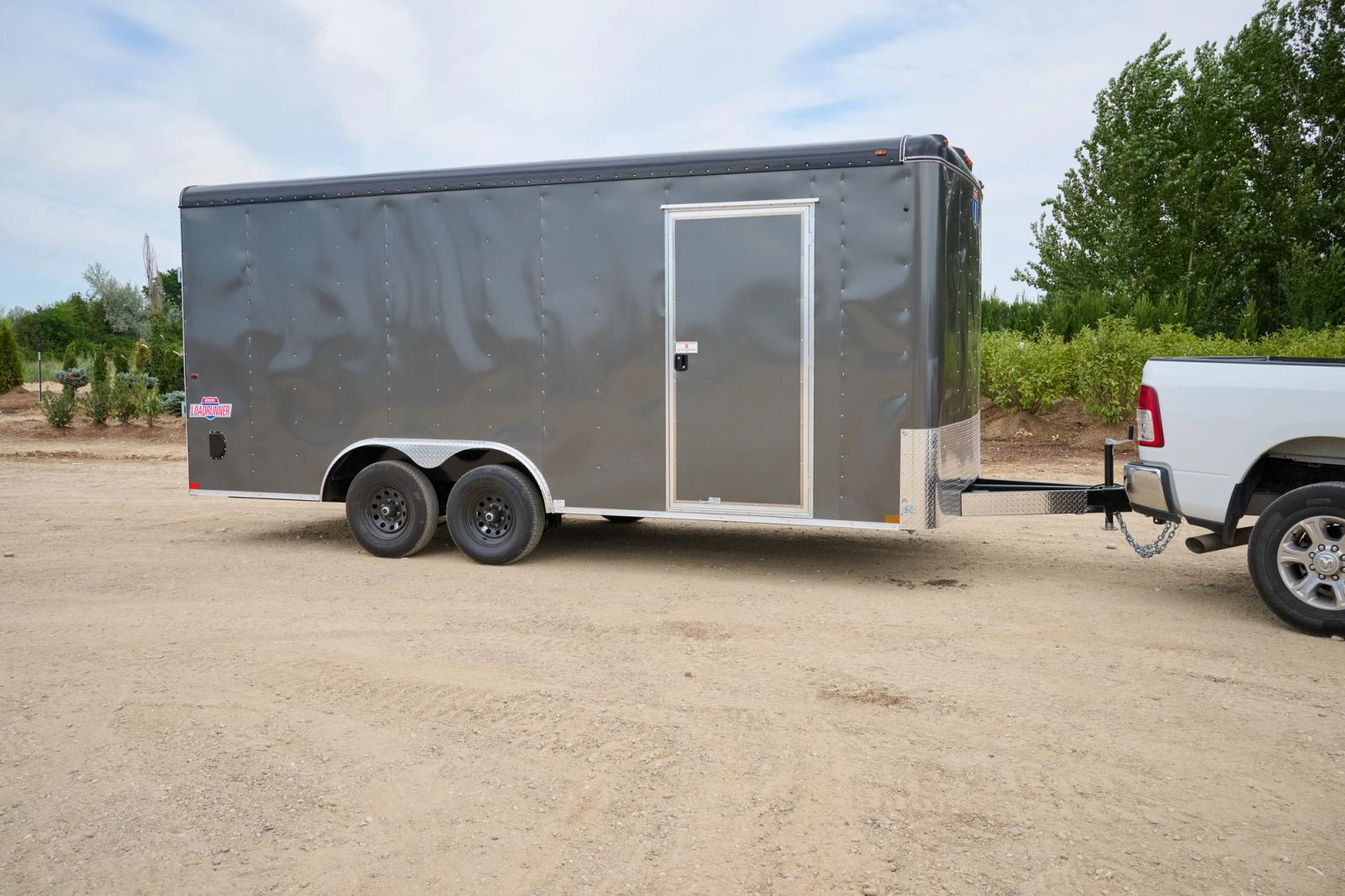
What a 7x16 Enclosed Cargo Trailer Gives You
- Interior length of roughly 16 feet 5 inches, with interior width around 6 feet 6 inches.
- Interior height varying by tier from approximately 5 feet 11 inches up to about 7 feet 1 inch.
- Gross weight rating commonly around 7,000 lbs, with empty weight roughly 2,300 lbs, leaving approximately 4,700 lbs of payload.
- A rear ramp door on ramp-rear configurations, which loads furniture and appliances at a manageable gradient.
Please note: Listed dimensions and specifications are approximate and subject to change. Please verify exact dimensions with your local store before purchase.
That footprint handles the contents of a typical two to three bedroom home for most people, particularly with the taller interior available on higher tiers. Households with a large amount of furniture, or anyone unwilling to make loading decisions, may find a larger box truck the easier fit. The honest comparison is that the gap is narrower than it looks in an advertisement.
The One-Way Problem
This is the single biggest structural difference, and it usually decides the question on its own.
A rented truck can be collected in one city and left in another. A trailer you own comes home with you, which means a return journey with an empty trailer, additional fuel and additional days. For a genuine relocation across several states with no reason to come back, that return leg is a real cost that no capacity comparison offsets.
The picture reverses if you are moving somewhere you will be towing anyway. Anyone relocating to a property with land, starting a trade business, or moving equipment and vehicles alongside household goods usually finds the trailer earns its keep from the first month after arrival.
What the Drive Is Actually Like
- Reversing: A trailer reverses in the opposite direction to your steering input, which takes practice. A box truck reverses like a large car. For anyone who has never towed, this is generally the steepest part of the learning curve.
- Fuel and range: Both options reduce economy considerably. A trailer adds weight and a tall flat face to the wind, and a loaded box truck is working hard the whole way.
- Grades and crosswind: Towing on mountain passes and in open crosswind asks more of the driver. Allowing extra stopping distance is worth building into your schedule rather than discovering en route.
- Parking overnight: A truck and trailer combination needs more room than a box truck and is harder to place at a motel. Planning stops ahead generally saves frustration.
- Familiarity: You already know how your own vehicle brakes and accelerates. A rented truck is unfamiliar for the entire trip, which matters more than people expect on a long drive.
Anyone whose tow vehicle is close to its limits should check the numbers before committing to a large trailer. Our guide to trailer GVWR and responsible towing walks through how payload and tongue weight interact, which is usually the binding constraint rather than tow rating.
Cost Over Time Rather Than Cost on the Day
Rental pricing changes constantly by season, route and availability, so comparing a specific quote against a specific trailer price is a snapshot that goes stale quickly. The more durable way to think about it is by asking what happens after the move.
- A rental is spent money: You return the vehicle and hold nothing. For a genuine one-off, that is often the right trade.
- A trailer is a retained asset: It holds resale value, it doubles as lockable storage between uses, and enclosed cargo trailers generally hold value well relative to what they cost.
- Repetition changes everything: People rarely move exactly once. A move now, a family member's move next year and a few furniture runs in between add up quickly against a single purchase.
- Ongoing use decides it: If the trailer will carry tools, a motorcycle, market stock or yard equipment after the move, the comparison stops being about moving at all.
For anyone where the purchase makes sense but the timing is awkward, trailer financing options can spread the cost across the period you will be using it.
Protection and Security on a Multi-Day Drive
A long-distance move usually means at least one overnight stop with everything you own sitting in a parking lot.
Both an enclosed trailer and a box truck lock and keep weather out. The practical difference is that a trailer can be unhitched and left while you drive your own vehicle to dinner or to a viewing appointment, which a loaded box truck cannot. Against that, a trailer parked separately is a more tempting target than one attached to a vehicle, so choosing well-lit parking and using a coupler lock is worth the small effort.
Which One Fits Your Move
A few conditions settle it. Anyone without a tow-rated vehicle should rent, since the cost of acquiring one for a single move rarely makes sense. Anyone making a one-way relocation with no ongoing hauling need is generally better off renting and walking away at the destination.
Owning tends to win where you already tow, where the move is regional enough that the return leg is manageable, or where the trailer has a job waiting for it afterward. Households unsure which size would suit them can work through it with our overview of choosing the right trailer size, and anyone weighing the two most common large formats can compare 6x12 and 7x14 cargo trailers directly.
Find the Right Trailer at TrailersPlus
TrailersPlus is the nation's largest independent trailer dealer, carrying Interstate trailers across over 90 locations nationwide. Standing inside a 7x16 is the fastest way to judge whether it will take your household, because floor area and headroom are difficult to picture from a specification. Browse the current trailer inventory to compare sizes, or find a trailer dealership near you where staff can measure the exact model against what you need to move.
Frequently Asked Questions
What size cargo trailer do I need to move a three bedroom house?
A 7x16 enclosed trailer, offering roughly 16 feet of floor length and up to about 7 feet of interior height on higher tiers, handles a typical three bedroom household for most people. Homes with a large amount of furniture may need two trips or a larger format, so measuring your bulkiest items before deciding is generally worthwhile.
Is towing a trailer cheaper than renting a moving truck?
Over a single one-way move a rental is often simpler and avoids a return journey. Across repeated moves, or where the trailer will be used afterward, ownership generally works out better because you retain an asset rather than a receipt. Rental pricing varies enough by season and route that comparing current quotes is worth doing.
Can an SUV tow a cargo trailer for a long-distance move?
Many full-size SUVs carry tow ratings that suit a mid-size enclosed trailer, though payload capacity is typically the tighter constraint because tongue weight counts against it. Checking both figures for your specific model and configuration before loading is the reliable approach.
How long does a cross-country move take with a trailer?
Towing generally adds time compared with driving alone, since fuel stops are more frequent and comfortable cruising speeds are lower. Most people find planning shorter daily distances than they would normally drive makes the trip considerably less tiring.
Do I need special insurance to tow a trailer across state lines?
Coverage arrangements for owned trailers vary by insurer and by policy, and requirements can differ between states. Confirming with your provider before a long-distance trip is the sensible step, since assumptions about what an auto policy extends to are not always correct.