- Trailer Knowledge
Key Takeaways: Quick Decision Guide
- They share a chassis. A landscape trailer is an open utility trailer with a different equipment package, not a separate class of trailer.
- The mesh gate is the real difference, and it is what makes loading a mower straightforward.
- Taller rails matter for clippings and debris, which is the load open utility trailers handle worst.
- Taller rails cost you payload, roughly 125 lbs on a 6x12, because the extra steel comes out of the same budget.
- If your main load is loose material, neither is right. That is a dump trailer job.
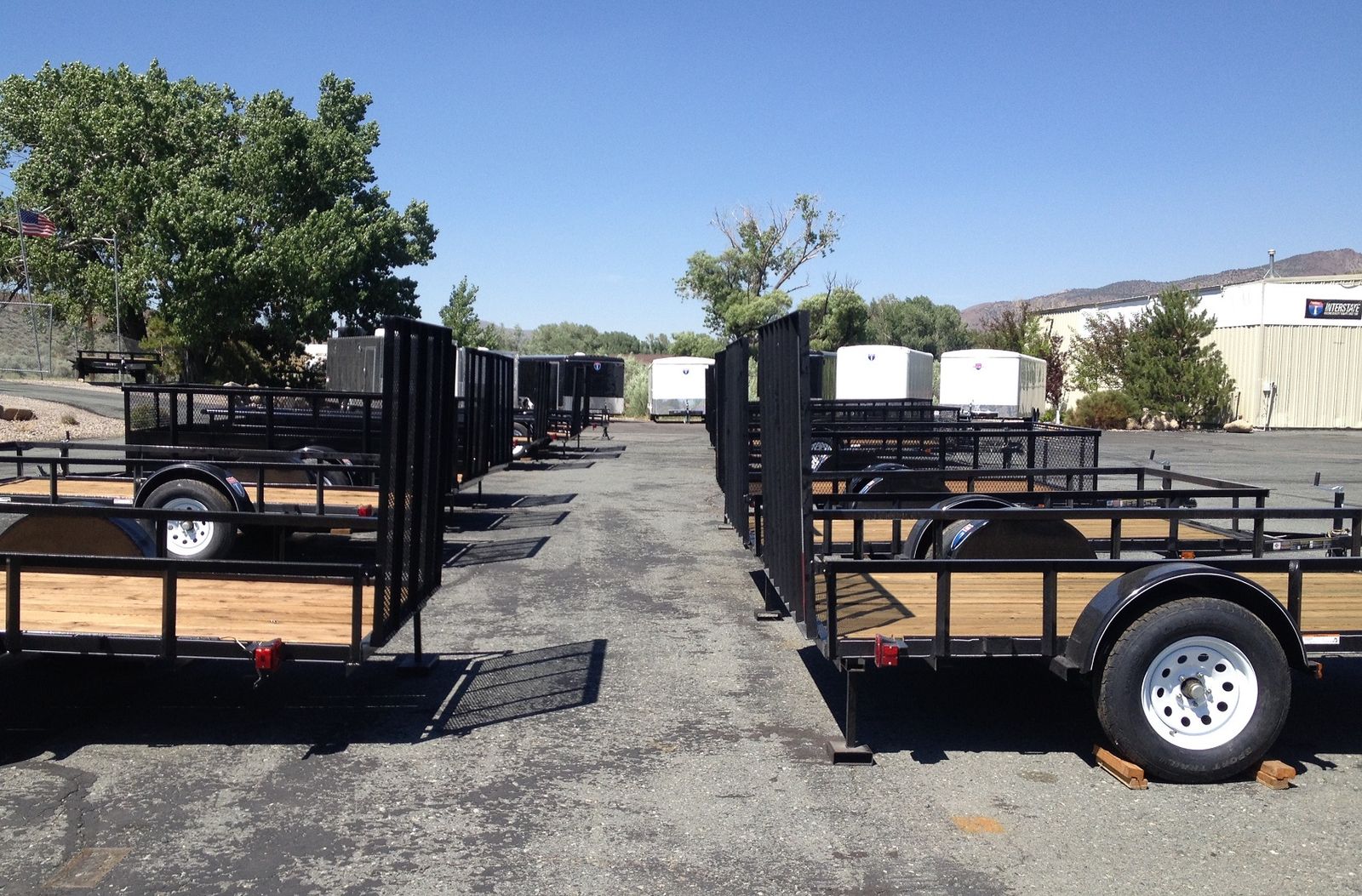
A landscape trailer is an open utility trailer with a mesh ramp gate, taller side rails and usually a few mounting points for equipment. The chassis is the same family. If you are choosing between the two for lawn and garden work, pick the landscape package when you load a mower regularly or haul clippings in volume, and the plain deck when you do not, because the rails and gate cost you a little payload in exchange for height you may not need.
Carry-On, which is the open utility line to look at first, builds this as a set of packages on a shared deck rather than as separate products. There is a dedicated heavy-duty landscape configuration at the top of the range, and below it the same decks appear with standard, mid-height and high-side rails. Everything below is about which of those actually changes your day. Sizes across the single-axle utility trailers range apply to both.
What a Landscape Package Usually Adds
There is no universal definition, and equipment varies by builder, but the landscape configuration generally means some combination of the following:
- A mesh ramp gate: a full-width rear gate that folds down into a ramp, usually expanded metal rather than solid, so it is light enough for one person to lift.
- Taller side rails: roughly 24 inches on the high-side package against approximately 14 inches on the standard deck, with a mid-height option near 21 inches.
- Stake pockets or rail mounts: points to attach trimmer racks, blower mounts and toolboxes.
- Sometimes a longer deck, to fit a walk-behind ahead of a rider.
Please note: Listed dimensions and specifications are approximate and subject to change. Please verify exact dimensions with your local store before purchase.
Most of that sits on the same chassis, which is why the two get compared at all. The one exception is at the top of the range, where the heavy-duty landscape configuration moves to a braked tandem axle: a 7x16 in that spec is rated near 9,990 lbs with payload in the range of 7,790 lbs, against roughly 5,350 lbs for the standard tandem deck of the same size. That is a different trailer, not a different trim.
Please note: Listed dimensions and specifications are approximate and subject to change. Please verify exact dimensions with your local store before purchase.
Where the Difference Actually Shows Up
Loading a mower
This is the case that justifies the package on its own. A zero-turn or a rider needs a ramp wide enough for both wheel tracks, and it needs the transition from ramp to deck to be gradual enough that the deck does not catch. A full-width mesh gate gives you both, where separate loading ramps give you two narrow paths and a lot of room for error.
The mesh matters more than it sounds. It sheds water and debris, it gives tires something to bite on, and it is substantially lighter to lift than a solid gate of the same size.
Hauling clippings, leaves and brush
Low rails are the weak point of a plain utility trailer for lawn work. Grass clippings and leaves are bulky and light, so you run out of height long before you run out of weight, and anything above rail height blows off on the drive. Taller rails, or rails you can extend, change that arithmetic.
Carrying the tools as well as the machine
Crews running trimmers, blowers and edgers alongside a mower need those secured and accessible. Rail-mounted racks handle that, and they need rails to mount to. For a homeowner with a mower and a rake, this is not a consideration at all.
Sizes and Payload for Lawn Work
Below the heavy-duty configuration the sizing question is the same either way. Across the Carry-On single-axle range, all rated at approximately 2,990 lbs with standard rails, the figures run like this:
- 5x10: deck of roughly 10 feet by about 5 feet, payload of around 2,190 lbs.
- 6x10: deck of roughly 10 feet by approximately 6 feet 4 inches, payload close to 2,140 lbs.
- 6x12: deck of roughly 12 feet by approximately 6 feet 4 inches, payload in the range of 2,115 lbs.
- 6x14: deck of roughly 14 feet by approximately 6 feet 4 inches, payload around 2,090 lbs.
Please note: Listed dimensions and specifications are approximate and subject to change. Please verify exact dimensions with your local store before purchase.
For a single rider and a few tools, a 5x10 is usually enough. A 6-wide is the practical choice once a zero-turn is involved, since deck width decides whether the machine sits square rather than at an angle. Crews carrying a rider, a walk-behind and handheld tools generally want the 12-foot deck.
If the machine is heavy or awkward to drive up a gate, a tilt deck is worth considering instead. A 6x12 tilt is rated near 5,200 lbs with payload around 3,590 lbs, and the whole deck lowers to the ground. Sizing logic across types is covered in choosing a trailer size.
When Neither One Is the Right Answer
Landscape and utility trailers both assume the load comes off the way it went on. Once you are moving material by volume rather than by piece, that stops being true.
Mulch, soil, gravel, sand and demolition debris all want to be tipped rather than shoveled, and shoveling a full deck by hand is the job that convinces people to change trailers. Anyone moving loose material weekly should be comparing dump trailers rather than deciding between two versions of an open deck.
Equipment heavier than a mower is the other case. A compact tractor or a skid steer belongs on an equipment trailer with the deck rating and ramp design built for it, not on a landscape trailer with a gate rated for a rider.
Decide on the Gate, Not the Label
The useful question is not which name is on the listing. It is whether you load a machine regularly and whether your loads run tall. Answer yes to either and the landscape package earns its cost. Answer no to both and a plain open deck does the same work for less.
TrailersPlus is the nation's largest independent trailer dealer, with over 90 locations nationwide. It is the only retail seller of Interstate, America's number one brand in cargo trailers, and carries Carry-On across the open utility range. Roughly 95 percent of trailer weight is sourced in the USA, and customers rate the company 4.8/5 across more than 10,000 reviews. Gates, rails and racks can also be added to a plain trailer later, and the options are listed under trailer parts and accessories if you would rather start simple. Current open deck options are in the utility trailer markdowns listing.
Frequently Asked Questions
Is a landscape trailer just a utility trailer with a gate?
Through most of the range, close to it. The chassis is shared and the landscape package adds a mesh ramp gate, taller rails and tool mounts, which costs a little payload rather than adding any. The exception is the heavy-duty landscape configuration, which moves to a braked tandem axle and a rating of approximately 9,990 lbs. That one is a genuinely different trailer.
Can I haul a zero-turn mower on a plain utility trailer?
Often yes, with loading ramps, though it is more awkward. A full-width mesh gate gives both wheel tracks a continuous surface and a gentler transition onto the deck. Check the mower's width against the deck width and its weight against the trailer's payload before you commit.
What size landscape trailer do I need for a zero-turn and a walk-behind?
A 6-wide deck at roughly 12 feet is the common answer, which gives you room for a rider and a walk-behind in line. A 10-foot deck is usually tight once both machines and any handheld tools are aboard.
Are taller rails worth it if I only haul yard waste occasionally?
Probably not on their own, though they help. Clippings and leaves run out of height before they run out of weight, so rails add usable volume, and they cost roughly 125 lbs of payload on a 6x12. For occasional use, a cargo net over a standard deck covers most of the same ground for less.
Should I buy a landscape trailer or a dump trailer for lawn care?
It depends on what you move most. If the bulk of your hauling is machines and tools, an open deck with a gate is the better fit. If you are regularly moving mulch, soil or debris by volume, a dump trailer typically saves enough labor to justify the difference.