- Trailer Knowledge
Key Takeaways: Quick Decision Guide
- A 6-wide deck is the safe default. It clears most zero-turns with room to walk the machine on straight.
- Measure the cutting deck, not the wheelbase. The deck is the widest point, and the discharge chute adds to it.
- A full-width mesh gate matters more than the trailer does. It is the difference between driving a mower on and easing it on.
- A 5-wide works for compact residential riders only, and leaves nothing spare for a trimmer or a blower.
- Add roughly two feet of length beyond the machine so tie-downs have somewhere to go.
For most zero-turn mowers, a 6-wide open utility trailer at roughly 10 to 12 feet long is the right answer. Zero-turn cutting decks generally run between 42 and 72 inches, and a 6-wide deck gives you approximately 6 feet 4 inches of width to work with, which lets even a wide commercial deck sit square rather than at an angle. Smaller residential riders fit a 5-wide, and crews carrying a rider plus a walk-behind should be looking at roughly 14 feet.
The decision that trips people up is not length. It is width, and the gate. Both are covered below, along with the payload figures that decide whether you need one axle or two. Sizes across the open utility trailers range apply whether you are hauling one machine or a crew's worth.
Deck Width Decides It Before Deck Length Does
Mower decks are wider than people estimate, and the deck overhangs the wheels rather than sitting inside them. That means the measurement that matters is across the cutting deck with the discharge chute in its travel position, not across the tires.
Here is how the common open deck widths compare:
- 5-wide: roughly 5 feet of usable deck. Suits residential riders with cutting decks around 42 to 48 inches. Tight for anything larger.
- 6-wide: approximately 6 feet 4 inches of usable deck. Handles most zero-turns, including commercial decks, with margin on both sides.
- 7-wide: roughly 6 feet 10 inches. Worth it when a second machine or a bulky attachment travels alongside.
Please note: Listed dimensions and specifications are approximate and subject to change. Please verify exact dimensions with your local store before purchase.
Measure your own machine before you shop, then add a few inches on each side so you are not threading it on every time. Loading a mower that only just fits is the kind of job that goes wrong once and then puts you off using the trailer at all.
Length and Payload by Size
Across the Carry-On single-axle open utility range, all rated at approximately 2,990 lbs, the practical options for mower hauling run like this:
- 5x10: deck of roughly 10 feet by about 5 feet, payload of around 2,190 lbs. Fits a residential rider with room for a trimmer.
- 6x10: deck of roughly 10 feet by approximately 6 feet 4 inches, payload close to 2,140 lbs. The common answer for a single zero-turn.
- 6x12: deck of roughly 12 feet by approximately 6 feet 4 inches, payload in the range of 2,115 lbs. Room for the machine plus handheld tools.
- 6x14: deck of roughly 14 feet by approximately 6 feet 4 inches, payload around 2,090 lbs. Fits a rider and a walk-behind in line.
Please note: Listed dimensions and specifications are approximate and subject to change. Please verify exact dimensions with your local store before purchase.
Payload is rarely the binding constraint for a single mower, since most zero-turns weigh well under a thousand pounds. It becomes the constraint once fuel cans, a second machine and a full set of handheld tools travel with it, which is why crews tend to outgrow a single-axle trailer faster than homeowners do.
Riding Mowers and Walk-Behinds
A standard riding mower is narrower and lighter than a comparable zero-turn, which widens your options rather than changing the logic. A 5x10 open deck handles most riders with room for a trimmer and a couple of bags, and it stores in a normal garage bay.
Crews carrying a rider and a walk-behind together generally need the 12 or 14-foot deck, since the two machines travel in line rather than beside each other. Deck length is the constraint in that case, not weight, and running out of length is what forces a second trip.
Getting the Mower On and Off
The gate matters more than the trailer does. A full-width mesh ramp gate gives both wheel tracks a continuous surface and a gentler transition onto the deck. Separate loading ramps give you two narrow paths and no margin, and a low-slung mower deck catches at the transition between ramp and trailer.
Mesh is worth having over solid steel for this job. It sheds water and grass clippings, it gives tires something to grip, and it is substantially lighter to lift than a solid gate of the same size, which matters when you are raising it twenty times a day.
Once the machine is aboard, secure at four points rather than two, run the straps to the frame rather than over the cutting deck or through the wheels, and set the parking brake. Straps, ratchets and rail-mounted racks are available through trailer parts and accessories if your trailer did not come with enough anchor points.
Open Deck or Enclosed
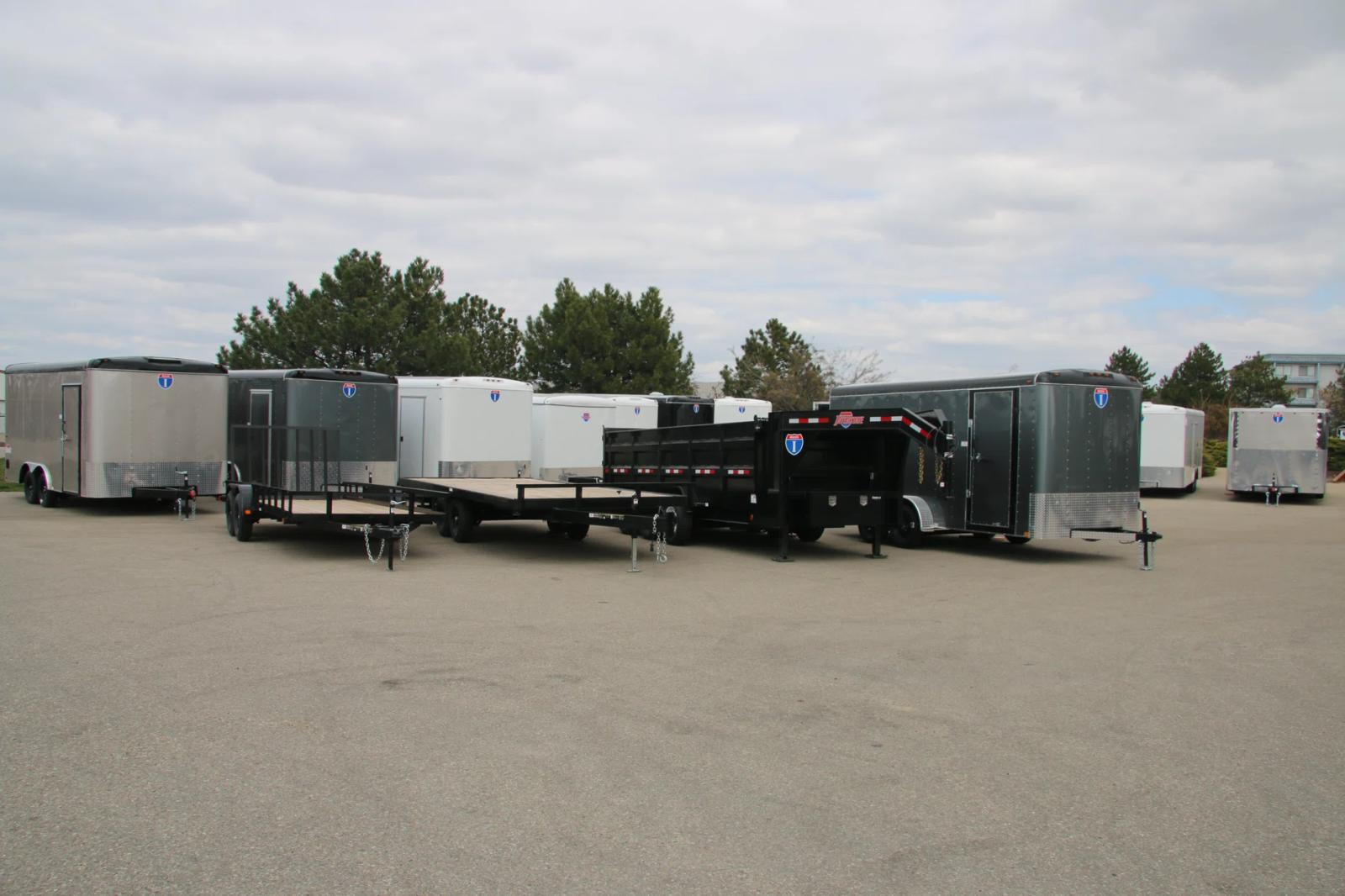
Open utility trailers are the usual answer for mower hauling. They load faster, cost less, tow lighter and let you see the load in the mirror. For a homeowner moving a mower a few times a season, there is little reason to look further.
Enclosed makes sense for two reasons. Commercial crews leaving equipment on a job site or parked overnight get security that an open deck cannot offer, and a trailer that doubles as lockable storage saves a shop trip at each end of the day. Weather is the second reason, since equipment that arrives dry needs less attention than equipment that does not. If that is your situation, the enclosed cargo trailer lineup covers the same size range with a roof on it.
A tilt deck is the third option and is worth considering if loading is the part of the job you dread. The whole deck lowers to the ground, so there is no ramp angle and nothing for a low mower deck to catch on. Sizing logic across the types is covered in choosing a trailer size.
See the Deck Width for Yourself
Every figure here narrows the field rather than settling it. Mower deck widths vary by model year and by whether the discharge chute folds, and a few inches decides whether loading is routine or awkward.
TrailersPlus is the nation's largest independent trailer dealer, with over 90 locations nationwide and more than 11,600 trailers in stock. It is the only retail seller of Interstate, America's number one brand in cargo trailers, and carries Carry-On across the open utility range. Roughly 95 percent of trailer weight is sourced in the USA, and customers rate the company 4.8 across more than 10,000 reviews. Bring the machine's deck measurement to a trailer dealership near you and put a tape across the trailer before you commit. Every trailer includes two complimentary 40-point inspections at the 12-month and 24-month marks, and you can compare open decks across the current trailer inventory ahead of the visit.
Frequently Asked Questions
What size trailer do I need for a 60-inch zero turn mower?
A 6-wide open utility trailer, which gives you approximately 6 feet 4 inches of deck width against a 60-inch machine. That leaves a few inches on each side, which is what you want for loading without aiming. Length of roughly 10 to 12 feet covers the machine plus tie-down room.
Will a zero turn mower fit on a 5x8 trailer?
Usually only the smallest residential models with cutting decks around 42 to 48 inches. A 5-wide deck gives you roughly 5 feet of width, and an 8-foot length leaves little room for tie-downs once the machine is aboard. Measure your cutting deck before assuming it clears.
Do I need a ramp gate or separate loading ramps?
A full-width mesh ramp gate is generally easier and safer. It gives both wheel tracks a continuous surface and a gentler transition onto the deck, where separate ramps give you two narrow paths and more room for error with a low-slung mower deck.
Should I get an open or enclosed trailer for my mower?
Open decks suit most homeowners and cost less. Enclosed trailers make sense for commercial crews who leave equipment parked overnight or want the trailer to double as lockable storage, and for anyone who would rather their equipment arrived dry.
How do I secure a zero turn mower for transport?
Use four tie-down points rather than two, run the straps to the machine's frame rather than over the cutting deck or through the wheels, and set the parking brake. Check the straps again after the first few miles, since loads typically settle once the trailer starts moving.