- Utility Trailers
- Equipment Trailers
- Trailer Knowledge
Key Takeaways
- Southwest Missouri is serious cattle and hay country, and the hauling reflects it.
- Equipment trailers move tractors and implements between fields and properties.
- Utility and dump trailers handle feed, fencing, gravel, and everyday material.
- Browse trailers near Springfield to match a trailer to your operation.
A Region Built on Grass and Cattle
Southwest Missouri sits in one of the densest cattle-producing regions in the country. Drive any direction out of Springfield and within twenty minutes you are in pasture - Greene, Christian, Polk, Dade, and Lawrence counties running cow-calf operations, hay ground, and the mix of small acreages and serious commercial outfits that define agriculture here. All of it generates hauling, and most of it is not the hauling people picture when they think about farm trailers.
The everyday reality is equipment and material. A tractor that needs to get to the far property. An implement coming back from the dealer. Fencing supplies, mineral, feed, gravel for a washed-out lane. Understanding which trailer handles which of those jobs is what keeps an operation from either overbuying or making four trips when one would do.
Equipment Trailers: Moving the Machines
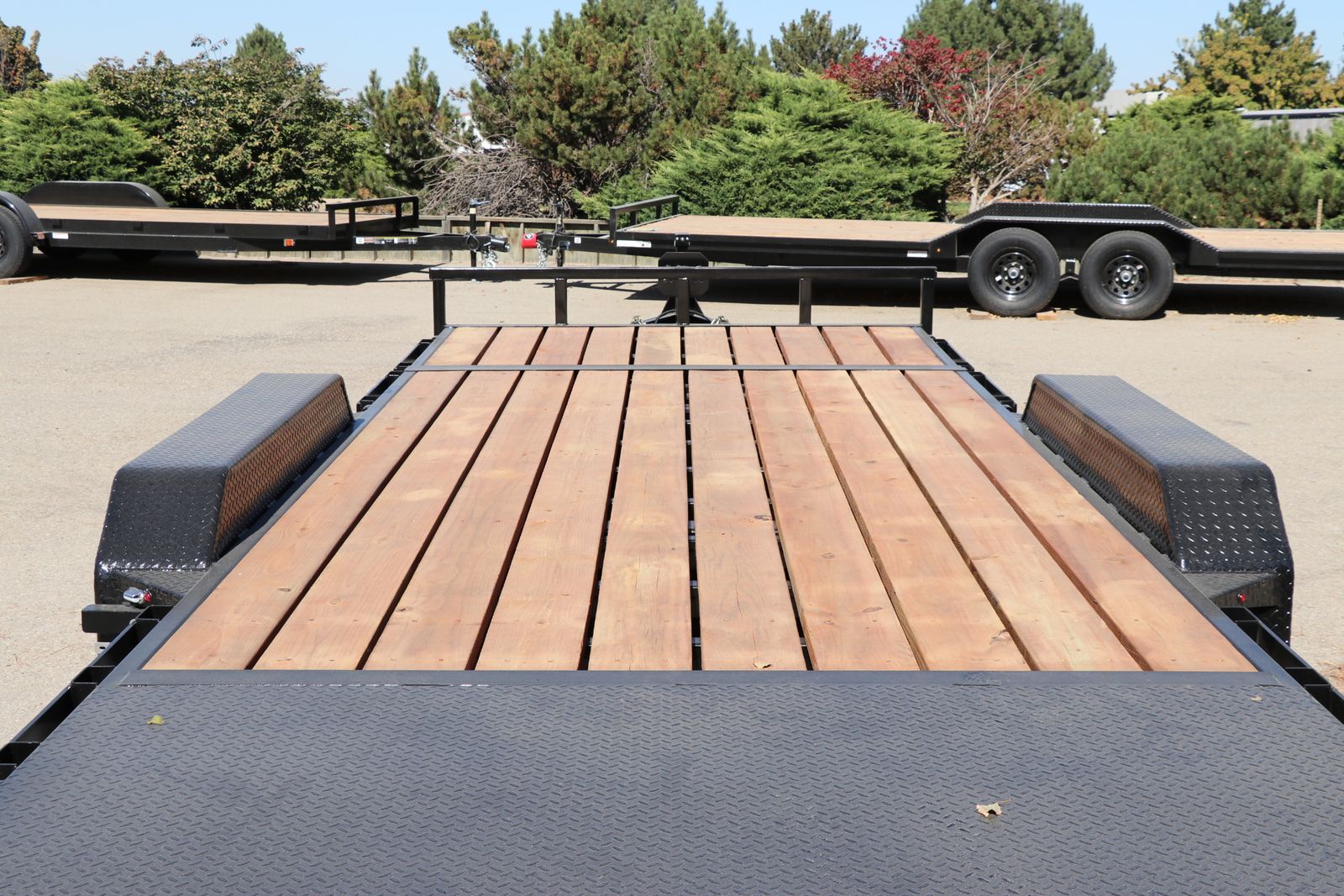
The workhorse purchase for most operations is an equipment trailer. Between renting a skid steer for a project, moving a tractor between leased ground, or bringing an implement home, machinery travel is constant. A solid deck, real tie-down points, and an axle rating with margin over your heaviest machine are what matter.
Sizing it honestly
The mistake we see is buying to the machine you own today rather than the one you will own in five years. Compact tractors get traded for bigger ones; a skid steer gets added. If your operation is growing, size the axle rating above your current heaviest load. A trailer running at 95 percent of capacity every trip wears faster and tows worse than one with genuine headroom, and it limits what you can do when a project comes up.
Deck width matters on uneven ground
Loading a tractor on level concrete is one thing. Loading it in a gateway on soft, rutted ground is another. Extra deck width gives you margin on both sides when the approach is not perfect, which around here it rarely is. For larger machines, that width becomes a safety consideration rather than a convenience.
Utility Trailers: The Daily Driver
Ask most producers which trailer gets used most and it is not the big one - it is an open utility trailer. Fence posts and wire, mineral tubs, a load of feed, a pallet of supplies from town, hand equipment, the mower. A tandem-axle 6-wide covers nearly all of it and pulls easily behind a three-quarter-ton.
The decision worth thinking about is decking. Solid decking suits clean cargo and pallets. Mesh sheds mud and debris, which matters if the trailer lives on the place and sees pasture more than pavement. Side rails are worth adding if you routinely haul anything loose.
Dump Trailers: Gravel, Fill, and Cleanup
The trailer that surprises people with how much it gets used is the dump trailer. Ozarks lanes wash out and need gravel. Lots need fill. Corrals and old outbuildings need tearing out and hauling off. Doing any of that with a pickup bed and a shovel is a lost weekend; doing it with a hydraulic dump is an afternoon.
Size by weight, not by how much fits. Rock and wet fill hit a trailer's rating well before the box looks full, and Ozarks material is mostly rock. For routine loads of gravel and fill, a 6x12 at 12,000 pounds GVWR gives most operations real working margin.
Enclosed Cargo: Keeping Things Dry and Locked
Not every operation needs one, but an enclosed cargo trailer earns its place if you haul tools, parts, or anything worth locking up. It doubles as dry storage on the property - a place for the fencing tools, the sprayer parts, the things that should not sit out through a Missouri winter and summer.
Buying for the Operation You Run
Most operations end up with two trailers rather than one that tries to do everything: an equipment trailer for the machines and a utility or dump for material. Which pair depends entirely on your ground and your setup. Come describe your operation at the Eastgate store and we will help you sort out what actually earns its keep - and use the two included 40-point safety inspections to keep whatever you buy road-ready. Browse trailers near Springfield to start.
Frequently Asked Questions
What trailer should a small cattle operation buy first?
Usually a tandem-axle utility trailer - it covers feed, fencing, supplies, and hand equipment, which is the bulk of everyday hauling. Add an equipment trailer when machinery movement becomes routine.
How do I size an equipment trailer for a tractor?
Match the axle rating above your heaviest machine with genuine margin, and confirm the deck length and width suit its footprint. Bring your tractor's weight and dimensions and we will confirm the fit.
Is a dump trailer worth it on a farm?
If you haul gravel for lanes, fill for lots, or clear out old structures, yes - the hydraulic lift replaces hours of shoveling. Size by weight since Ozarks rock is dense.
Do you carry livestock trailers?
Our lineup is enclosed cargo, dump, utility, equipment, car haulers, and custom builds. For hauling equipment, feed, and material we can set you up well - stop in and we will point you to the right fit for what you move.
Where can I see these near Springfield?
At the Eastgate store on the north side of Springfield. Browse inventory near Springfield and schedule a visit.