- Equipment Trailers
- Trailer Knowledge
When you're shopping for a new trailer, it's easy to assume that flatbed and equipment trailers are essentially the same thing. After all, both feature an open deck and are designed to haul large or heavy cargo. However, the right choice depends on what you plan to transport and how often you'll use it.
Understanding the differences between a flatbed trailer and an equipment trailer can help you invest in a model that's better suited to your work, your tow vehicle, and your long-term hauling needs. Check out this comparison from TrailersPlus, and then contact us to find a hauler that fits your needs.
Key Takeaways
- Purpose Matters – Flatbed trailers offer flexibility, while equipment trailers are specifically designed for transporting machinery and heavy equipment.
- Construction Differs – Equipment trailers typically feature heavier-duty frames and higher weight capacities.
- Choose Based on Your Work – The right trailer depends on the cargo you haul most often.
What Is a Flatbed Trailer?
A flatbed trailer features an open, unobstructed deck that allows cargo to be loaded from the rear or either side. This design makes it a versatile option for transporting oversized or irregularly shaped loads that may not fit inside an enclosed cargo trailer.
Flatbed trailers are commonly used to haul:
- Lumber
- Building materials
- Pallets
- Pipes
- Landscaping supplies
- Farm equipment
- Large recreational items
Because there are no walls or roof, loading with forklifts or other equipment is often quicker and easier. The open design also gives you greater flexibility when securing unusually shaped cargo.
What Is an Equipment Trailer?
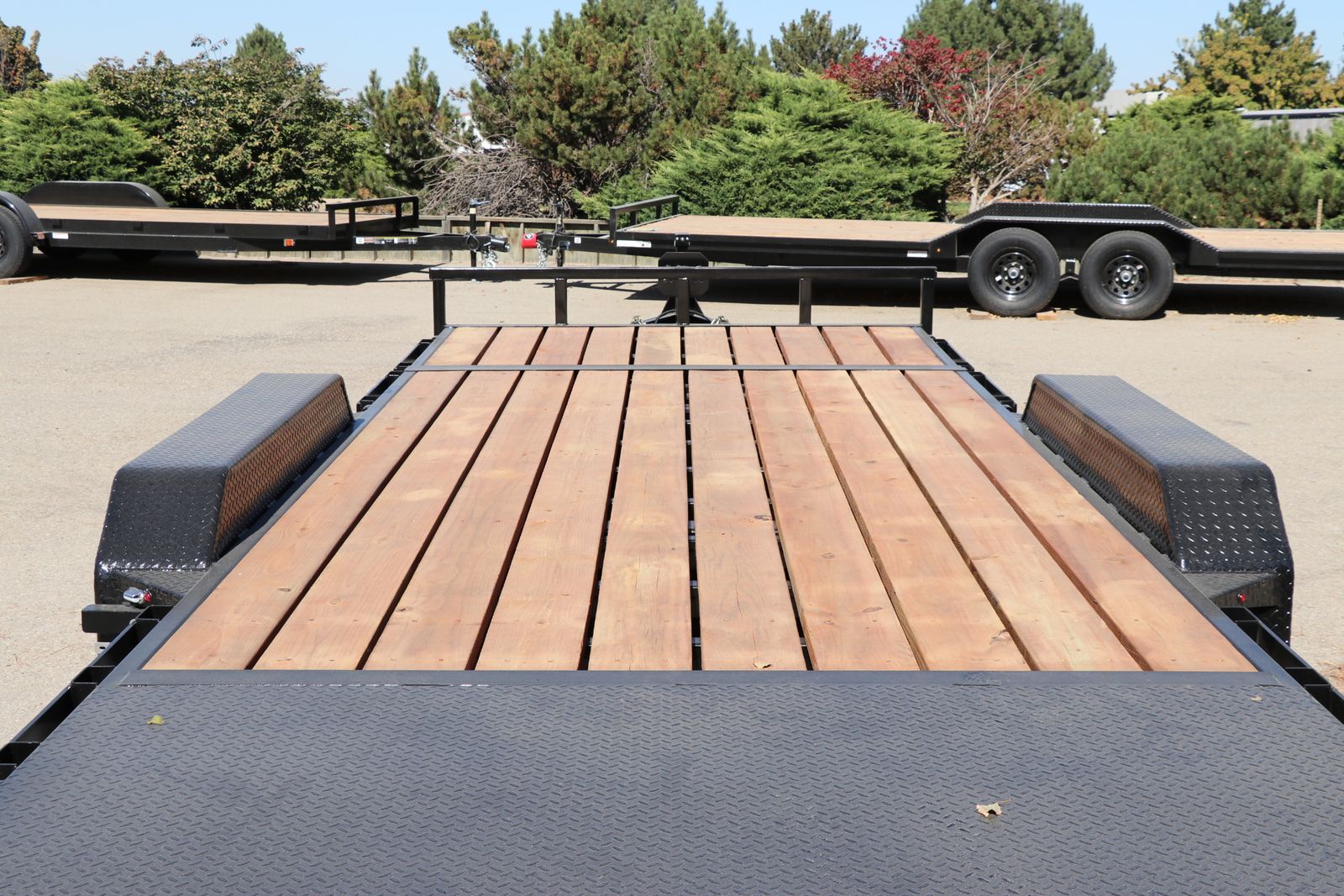
Equipment trailers are purpose-built for transporting heavy machinery and equipment. While they also feature an open deck, they're engineered to support substantially heavier loads than many general-purpose flatbed trailers.
Common cargo includes:
- Skid steers
- Mini excavators
- Compact tractors
- Utility vehicles
- Scissor lifts
- Construction equipment
Many equipment trailers include integrated loading ramps, reinforced steel frames, heavy-duty suspension systems, and higher Gross Vehicle Weight Ratings (GVWRs). These features help provide the durability and stability needed for demanding commercial applications.
Flatbed Trailer vs Equipment Trailer: Key Differences
Although flatbed trailers and equipment trailers share an open-deck design, they're built with different purposes in mind.
A flatbed trailer is designed to be as versatile as possible. Its open layout makes it easy to load cargo from the sides or rear, making it a practical choice for transporting building materials, pallets, lumber, and other oversized items. If you regularly haul a variety of loads that don't require enclosed protection, a flatbed model offers excellent flexibility.
An equipment trailer is engineered specifically for transporting heavy machinery and commercial equipment. These models typically feature reinforced steel frames, higher weight capacities, heavy-duty suspension components, and integrated loading ramps that simplify loading and unloading. Because they're built to handle greater stress, they're often the preferred choice for contractors, landscapers, farmers, and construction professionals.
Another important difference is payload capacity. While some flatbed trailers can handle substantial loads, equipment trailers are generally designed to carry heavier equipment such as skid steers, compact tractors, mini excavators, and other machinery.
Ultimately, the best choice comes down to how you plan to use it. If you need maximum versatility for hauling a wide range of materials, a flatbed trailer may be the better option. If your work regularly involves transporting heavy equipment, an equipment trailer is typically the more capable solution.
FAQs
What is GVWR?
GVWR (Gross Vehicle Weight Rating) is the maximum allowable combined weight of the trailer and its cargo.*
How do I know which size trailer I need?
Consider the dimensions and weight of the cargo you plan to haul most frequently, along with your tow vehicle's towing capacity.
How often should a trailer be serviced?
Routine inspections and maintenance should follow the manufacturer's recommendations and become more frequent with heavier use.
Shop Flatbread & Equipment Trailers Today
Choosing between a flatbed trailer and an equipment trailer starts with understanding how you'll use it. By considering your cargo, towing needs, and future projects, you'll be better prepared to choose a trailer that delivers reliable performance for years to come.
If you're ready to explore your options, the team at TrailersPlus can help you compare available models and find the right solution for your hauling needs. Contact us today!
*Source: Kelley Blue Book