- How To
- Parts
- Trailer Knowledge
Dry rot is a common issue in tires, especially on trailers that sit for long periods. Unlike tread wear from regular use, dry rot occurs due to environmental factors that cause the rubber to break down over time. This guide explains what causes dry rot, how to prevent it, and when it's time to replace your tires.
What Is Dry Rot?
Dry rot, also referred to as sidewall weathering, occurs when the rubber compounds in a tire deteriorate, leading to visible cracks on the tread or sidewall. It typically happens when your trailer is parked for long periods of time, or exposed to extreme temperatures, harmful chemicals and UV rays for extensive periods. When this happens, the rubber becomes brittle and may develop cracks, weakening the tire.
Common Signs of Dry Rot:
- Visible cracking on the sidewalls or tread.
- Rubber appears faded or discolored (turning gray or brown).
- Loss of flexibility—tires feel stiff or brittle when pressed.
- Increased air loss—dry-rotted tires lose pressure more quickly.
Dry rot doesn’t always cause immediate failure, but once it appears, the tire's structural integrity is already compromised, and the tire needs to be replaced as soon as possible.
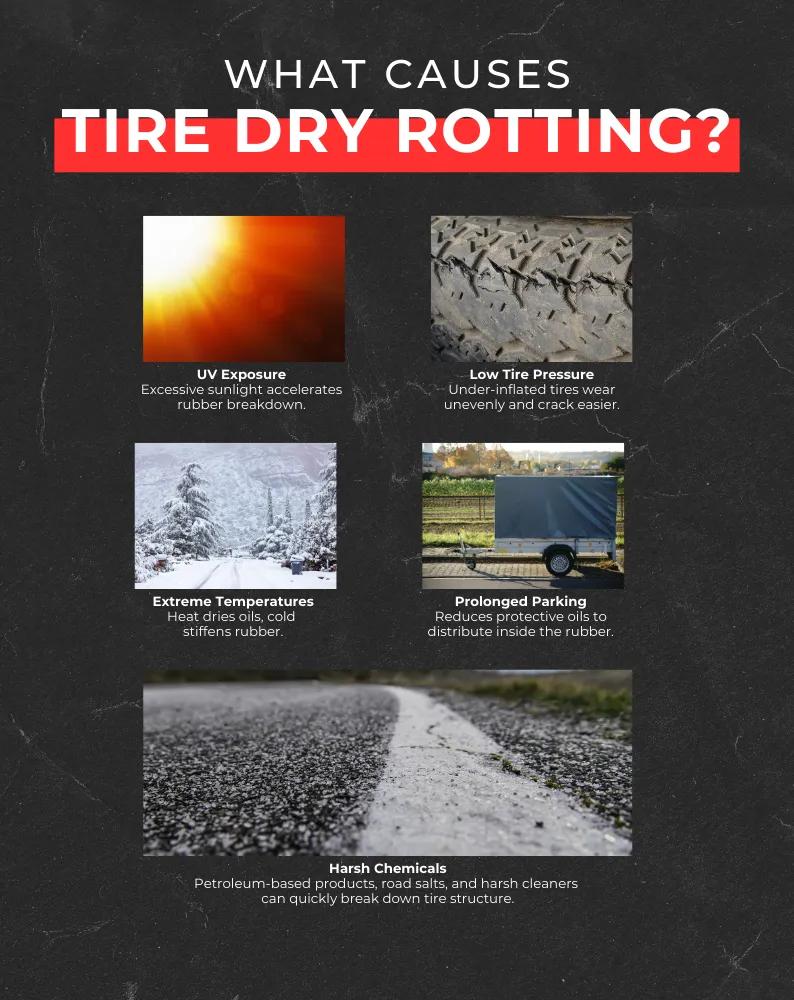
What Causes Dry Rot?
While age is a natural factor in rubber breakdown, several environmental and storage conditions can accelerate dry rot:
- Prolonged Sun Exposure: UV rays break down the rubber’s chemical structure, leading to cracks and weakening.
- Extreme Temperatures: Repeated exposure to high heat and freezing conditions makes the rubber expand and contract, causing premature wear.
- Ozone and Chemical Exposure: Pollutants, industrial fumes, and petroleum-based cleaners can degrade rubber over time.
- Improper Storage: Storing tires directly on concrete, stacking heavy objects on them, or keeping them in damp environments speeds up deterioration.
- Lack of Use: Rubber needs to flex and stay lubricated. Tires that sit stationary for long periods dry out and crack faster than those used regularly.
Preventing Dry Rot
Extending the lifespan of your trailer tires and preventing dry rot requires consistent care. Here are essential steps to keep your tires in good condition:
- Store Properly: Keep tires in a cool, dry place away from direct sunlight and high temperatures. Avoid leaving them on bare concrete.
- Use Tire Covers: UV-protective covers help block harmful rays and reduce exposure.
- Maintain Proper Inflation: Check and maintain the recommended tire pressure to prevent uneven wear and premature breakdown.
- Rotate & Move Tires Periodically: If your trailer is stored for months at a time, move it occasionally to keep the tires from developing flat spots and drying out.
- Clean with Mild Soaps: Avoid petroleum-based cleaners that can degrade the rubber. Use water and mild soap to remove dirt and debris.
- Follow a Maintenance Schedule: Inspect tires monthly for cracks, discoloration, or stiffness.
Preventative care is key—once dry rot sets in, the tire is no longer safe for use.
When to Replace Your Tires
Even if the tread is intact, a dry-rotted tire cannot properly hold air or withstand road stress. If a tire shows signs of dry rot, it’s time to replace it. Driving on a deteriorated tire increases the risk of blowouts, traction loss, and trailer instability.
Replace Your Tires Immediately If:
- Cracks are deep or extend through the rubber.
- Chunks of rubber are missing or peeling.
- Sidewalls or tread show widespread cracking.
- Tires feel brittle or stiff rather than flexible.
What Happens If You Ignore Dry Rot?
Ignoring dry rot puts you and your cargo at risk. As cracks deepen, the tire's structural integrity deteriorates, leading to:
- Blowouts, which can cause dangerous swerving or loss of control.
- Sudden air leaks, leaving you stranded or damaging the trailer.
- Loss of traction, making braking and cornering unsafe.
- Preventative maintenance and timely replacement are far more cost-effective than dealing with a failed tire on the road.
Even minor cracks indicate weakening rubber. If your trailer carries heavy loads, travels at highway speeds, or operates in extreme conditions, failing to replace dry-rotted tires can lead to sudden failure on the road.
Conclusion
Tire dry rot is a serious issue that can compromise the safety of your trailer. By regularly inspecting your tires, maintaining proper storage conditions, and replacing them when necessary, you can ensure a smooth, safe ride.
If you suspect your trailer tires are deteriorating, don’t take the risk—replace them before they lead to costly or dangerous failures on the road. Contact your local TrailersPlus dealership to schedule a service appointment today!