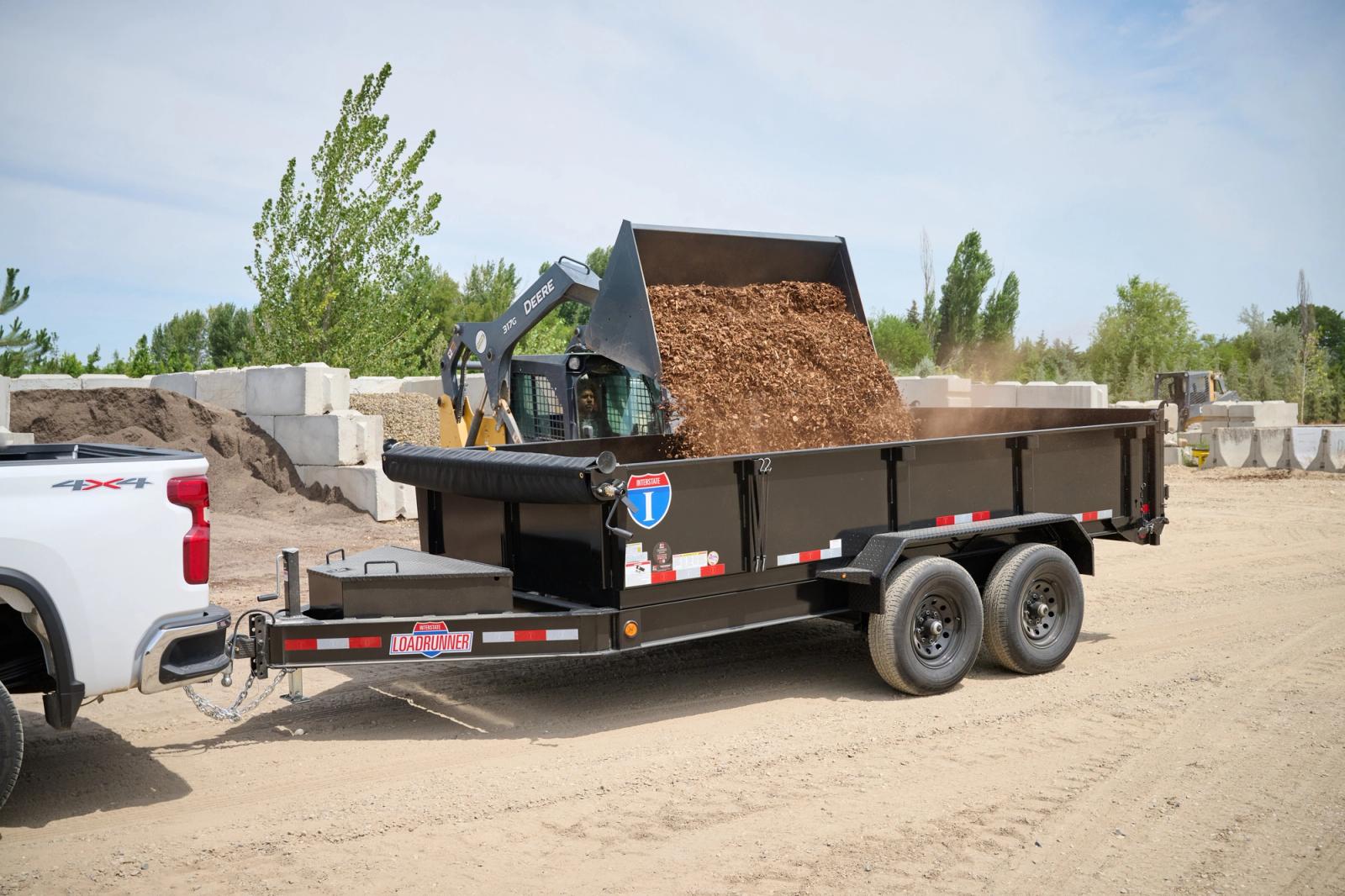
- Dump Trailers
- Trailer Knowledge
Key Takeaways
- For residential work, a 6x10 or 6x12 with 7K-10K GVWR fits most Cincinnati-area crews.
- For commercial hauling, a 7x14 with 14K GVWR gives payload headroom.
- Scissor lifts handle uneven loads more safely than single-cylinder telescopic lifts.
- Always size by weight, not volume - wet fill and concrete debris are heavy.
- Browse dump trailers near Cincinnati to compare current inventory.
Why Cincinnati-Area Contractors Rely on Dump Trailers
From residential renovation in the older neighborhoods to commercial development across Hamilton County and into Northern Kentucky, the Cincinnati metro keeps contractors busy year-round. A dump trailer replaces multiple pickup-bed trips and handles material your truck bed cannot.
Deck Size: 6-Foot vs. 7-Foot
A 6-foot dump trailer maneuvers better in tight residential spaces - the narrow lots and alley access common in older Cincinnati neighborhoods like Over-the-Rhine and Northside. It is ideal for cleanouts, roof tear-offs, and small demo jobs. A 7-foot model carries more volume and weight per trip, better suited to commercial excavation and bulk material runs across the growing suburbs.
GVWR: Size by Weight, Not Volume
The common mistake is thinking about volume instead of weight. A yard of wet topsoil runs about 2,200 lbs, a yard of gravel 2,800-3,000 lbs, and concrete demolition debris heavier still. Fill a trailer with three yards of wet material and you are near 9,000 lbs before counting the trailer. If your loads regularly exceed 10,000 lbs, a 14K-rated tandem-axle is the right call.
Hydraulic Lift: Scissor vs. Telescopic
Scissor lifts use two cylinders in an X-pattern that spread force evenly and resist frame twist on uneven loads - the standard on our dump trailers and the safer choice for most contractors. Telescopic single-cylinder lifts reach steeper angles but stress the frame more with off-center loads.
Steel Gauge
Dump trailers take more abuse than any other type. Our dump trailers use heavy 10-gauge steel decks, thicker and more impact-resistant than the 12- or 14-gauge found on lighter-duty models. That extra thickness holds up under daily loading of rock, concrete, and demolition debris.
Features Worth Having
Tarp kits keep loose loads contained - many Cincinnati-area municipalities require covering construction debris on public roads. D-ring tie-downs secure equipment. Two-way tailgates give you barn-door control for unloading and spreader-gate distribution for gravel.
What Most Cincinnati-Area Contractors Choose
Residential crews tend toward a 6x10 or 6x12 at 7K-10K GVWR. Commercial excavation, roofing, and masonry crews step up to a 7x14 at 14K. Browse dump trailers near Cincinnati to see current inventory at our Sharonville store.
Frequently Asked Questions
What GVWR do I need for hauling gravel or fill?
A yard of gravel or wet fill runs roughly 2,500-3,000 lbs. For 2-3 yard loads, a 10K GVWR is a safe starting point. For larger commercial loads, step up to 14K.
Is a 6-foot or 7-foot dump trailer better for landscaping?
A 6-foot model maneuvers better in residential driveways and through fence gates. A 7-foot carries more per trip for commercial-scale work. Match the size to your typical job site.
What is the advantage of a scissor lift?
A scissor lift spreads lifting force evenly across the bed, handling uneven and off-center loads more safely than a single-cylinder telescopic lift. It is the more practical choice for most work.
Do I need a tarp kit?
It is strongly recommended. Many Cincinnati-area municipalities require covering loose loads on public roads, and a tarp kit keeps material contained and helps you avoid citations.
Can I finance a dump trailer?
Yes. TrailersPlus offers on-site financing with competitive fixed rates and no early payoff penalties, plus a Rent-to-Own option with no hard credit check.