- Trailer Knowledge
Key Takeaways: Quick Decision Guide
- Solo operators start at a 6x12 open deck. It carries a rider, handheld tools and a day's supplies without towing heavy.
- Small crews want roughly 14 to 16 feet, because a second machine goes in line rather than alongside.
- A dump trailer earns itself back on material, not on machines. If you shovel a deck by hand, you are in the wrong category.
- High-side rails buy volume and cost payload, roughly 125 lbs on a 6x12. Worth it for clippings, not for pavers.
- Enclosed pays off when equipment sits overnight, since the trailer becomes lockable storage and a dry tool shed.
For a solo landscaper, a 6x12 open utility trailer is the starting point, and a tandem-axle deck at roughly 14 to 16 feet is where small crews land. The decision that matters more than size is whether your hauling is mostly machines or mostly material. Machines and tools belong on an open deck with a gate. Mulch, soil and debris belong in a dump body, because the alternative is shoveling a full deck by hand at the end of every job.
Size the trailer to its gross rating first, then to its footprint. Gross vehicle weight rating is the maximum the loaded trailer is designed to weigh, including itself, so usable payload is that figure minus the empty weight. Sizes across the open utility trailers range are set out below.
What Landscaping Work Actually Demands of a Trailer
Landscaping is harder on a trailer than most hauling, for three reasons that all show up in year two rather than week one. The trailer is loaded and unloaded several times a day, so gates and ramps see far more cycles than they would in general use. Loads are frequently uneven, with a mower at one end and bagged material at the other. And the trailer spends its life on job sites rather than on pavement.
That argues for steel framing, a gate rated for the machines you actually drive on, and a deck you can hose out. It also argues for buying slightly more trailer than this season needs, since crews grow faster than trailers wear out.
Open Deck or Dump: The Question That Sets the Budget
The split is about what you move rather than how much. Crews whose hauling is machines and tools are best served by an open deck with a mesh gate, since the load goes on and comes off the same way it arrived.
Crews moving mulch, soil, rock or debris by volume should be looking at commercial dump trailers. A compact 6x10 dump rated near 9,990 lbs carries payload around 7,080 lbs, runs electric brakes on both axles, and a combo gate lets you spread or dump depending on the job. The labor it saves on a mulch contract is the whole argument.
Please note: Listed dimensions and specifications are approximate and subject to change. Please verify exact dimensions with your local store before purchase.
Most landscaping operations end up needing both, and the order matters. Buy the open deck first if you are still building the equipment list, since it carries the machines that generate the work. Buy the dump first if you already have the machines and material handling is what is costing you hours.
Sizing by Crew and Equipment
These are the configurations landscapers most often settle on:
- 6x12 single-axle open deck: roughly 12 feet by approximately 6 feet 4 inches, payload in the range of 2,115 lbs on an approximately 2,990 lb rating. Solo operators and startups.
- 6x14 single-axle open deck: roughly 14 feet of length, payload around 2,090 lbs. Two extra feet for a walk-behind behind the rider.
- 6x12 tandem-axle open deck: same footprint on two braked axles, rated near 7,000 lbs with payload around 5,650 lbs. The jump most crews make when material enters the mix.
- 7x16 tandem-axle open deck: roughly 16 feet by approximately 6 feet 10 inches, payload close to 5,350 lbs, with a heavy-duty landscape version rated near 9,990 lbs carrying approximately 7,790 lbs.
- 7x16 tandem-axle enclosed: interior of roughly 16 feet 5 inches by about 6 feet 6 inches and close to 7 feet tall, payload around 4,640 lbs. Established crews who need the trailer locked.
Please note: Listed dimensions and specifications are approximate and subject to change. Please verify exact dimensions with your local store before purchase.
Notice where the capacity step actually happens. Going from a 12-foot deck to a 14-foot deck gains you length and costs you a little payload. Going from one axle to two roughly triples what you can carry. If your problem is weight rather than space, length is not the fix.
Gates, Rails and Tie-Downs
A full-width mesh ramp gate is the feature that matters most day to day, because it is what you use twenty times a shift. Mesh sheds water and clippings, grips tires better than smooth steel, and lifts lighter than a solid gate of the same size. On heavier decks a split ramp gate lets you load a mower up one side without dropping the whole gate.
Rail height decides how much you can stack. Standard decks run rails of roughly 14 inches, a mid-height package sits near 21 inches, and high-side runs approximately 24 inches. Taller rails cost payload, about 125 lbs on a 6x12, because the extra steel comes out of the same budget. Clippings and leaves run out of height before they run out of weight, so the trade usually favors rails. Pavers and aggregate do the opposite.
Please note: Listed dimensions and specifications are approximate and subject to change. Please verify exact dimensions with your local store before purchase.
Welded stake pockets let you drop 2x4 posts in and build temporary walls for a brush haul, which is the cheapest way to add volume you only need occasionally. Rail-mounted trimmer racks, blower mounts and E-track anchor points are all available through trailer parts and accessories, and E-track in particular is worth fitting early, since it lets the tie-down layout change as the equipment list does.
Why Enclosed Makes Sense for Some Crews
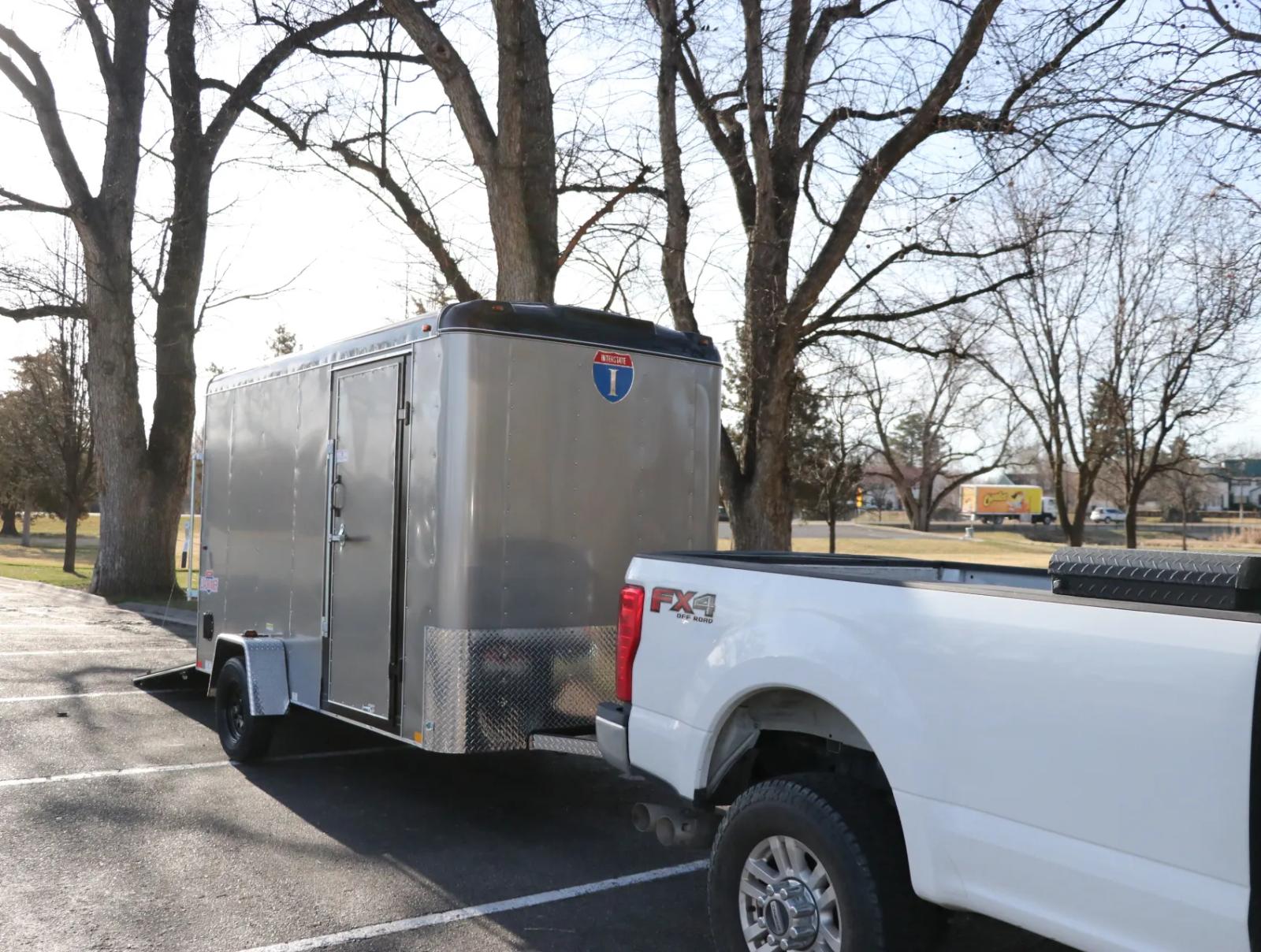
An enclosed trailer is a rolling tool shed. Equipment stays dry, stays out of sight and locks, which matters most for crews who leave the trailer hitched overnight or park at a site between days. The Interstate enclosed range uses a DuraFrame steel chassis with a Quadra-Sealed roof seam, and the aluminum siding runs 0.024 inch on Victory and 0.030 inch on LoadRunner.
The tradeoffs are real. Enclosed costs more, tows heavier, loads slower and hides the load from your mirrors. Crews who run to a yard every night and store equipment indoors generally do not need it. Crews whose trailer is their storage almost always end up there.
Paying for It
Financing runs through Sheffield Financial and Rock Solid Funding, with a rent-to-own program available that does not involve a credit check. There are no penalties for paying early, major credit cards are accepted, and payments can be split across more than one card. Applying with a co-signer or through a local bank or credit union are both options if credit is a constraint. Details sit on the trailer financing options page.
Build the Setup Around the Work
The trailer that suits a solo operator with a rider and a trimmer is not the trailer that suits a three-crew operation moving mulch by the yard. Both of those are cheaper to get right at purchase than to correct a season later.
TrailersPlus is the nation's largest independent trailer dealer, with over 90 locations nationwide and more than 11,600 trailers in stock. It is the only retail seller of Interstate, America's number one brand in cargo trailers, and carries Carry-On across the open utility range. Roughly 95 percent of trailer weight is sourced in the USA, and customers rate the company 4.8 across more than 10,000 reviews. Every trailer includes two complimentary 40-point inspections at the 12-month and 24-month marks. Bring your equipment list to a trailer dealership near you and, if budget is driving the decision, check the utility trailer markdowns first.
Frequently Asked Questions
What size trailer do I need for a landscaping business?
A solo operator with a rider and handheld tools is generally well served by a 6x12 open deck. Small crews running a rider plus a walk-behind usually need roughly 14 to 16 feet, and moving to a tandem axle is what raises capacity rather than adding length.
Do I need a dump trailer for landscaping?
Only if you move material by volume. Mulch, soil, rock and debris all want to be tipped rather than shoveled, and a dump body typically pays for itself in labor on that work. If your hauling is mostly machines and tools, an open deck with a gate is the better fit.
Are high-side rails worth it on a landscaping trailer?
Usually, if you haul clippings, leaves or brush, since those run out of height before they run out of weight. Rails cost roughly 125 lbs of payload on a 6x12, so crews hauling dense material like pavers or aggregate are generally better off without them.
Single axle or tandem axle for landscaping work?
Single axle covers a solo operator with one machine. Tandem makes sense once you carry material regularly, tow at highway speed between sites, or run loads that sit unevenly on the deck. The capacity difference is large, roughly 2,100 lbs against 5,650 lbs at the same 6x12 footprint.
Should a landscaping trailer be open or enclosed?
Open decks load faster, cost less and tow lighter, which suits crews returning to a yard each night. Enclosed trailers make sense when the trailer doubles as storage, when equipment sits parked overnight, or when keeping tools dry saves time at the start of each day.