- Remolques de carga
- Proceso de compra
- Conocimientos sobre remolques
Si tienes que trasladar herramientas, transportar equipos o materiales, ya sea por motivos laborales o personales, probablemente te hayas preguntado si es mejor comprar tu propio remolque o simplemente alquilar uno cuando lo necesites. No hay una respuesta única: depende de la frecuencia con la que lo necesites, de la flexibilidad que desees y de si estás dispuesto a asumir los gastos que conlleva ser propietario.
Coste: ¿Cuánto te puedes permitir gastar?
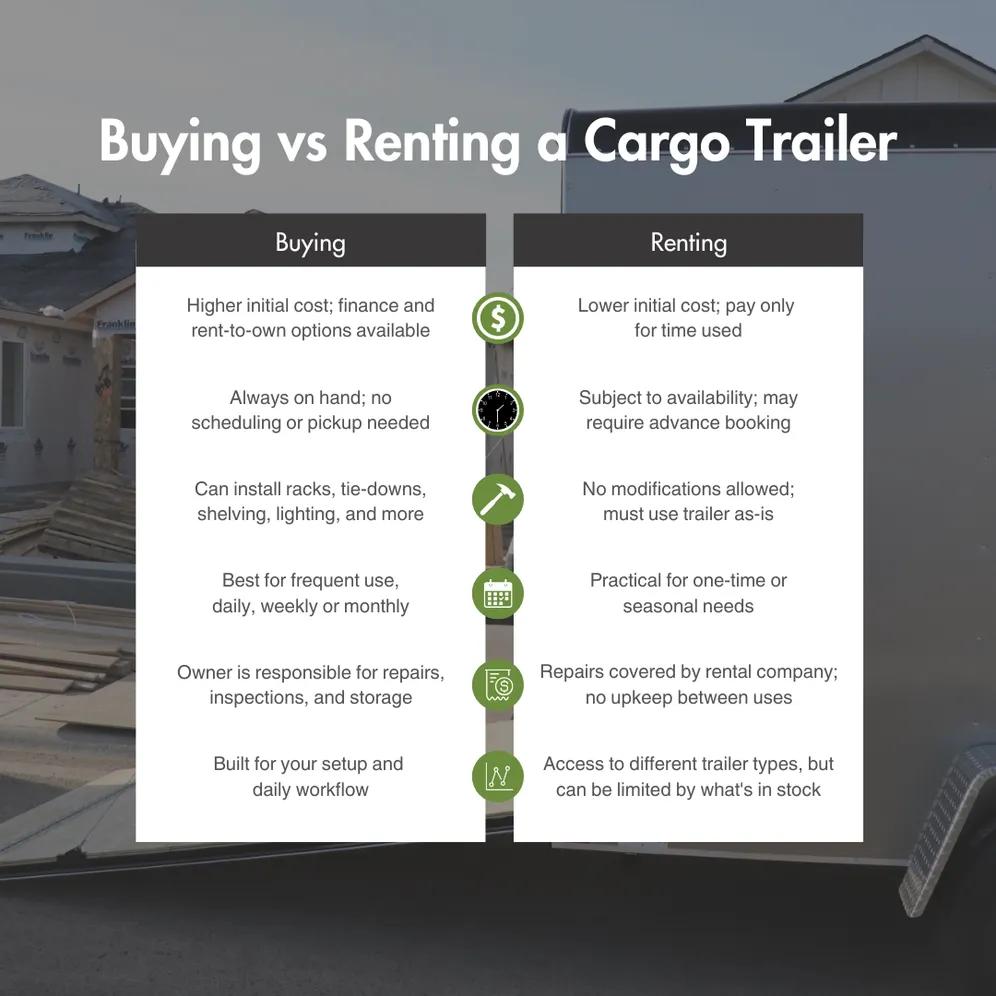
Comprar un remolque supone un gasto inicial mayor. Tanto si lo pagas al contado, como si lo financias o recurres a un programa de alquiler con opción a compra, te comprometes a abonar una cantidad única o a realizar pagos mensuales. Pero si tienes pensado utilizarlo con regularidad, esa inversión suele merecer la pena. Con el tiempo, suele resultar más barato ser propietario que seguir alquilando, sobre todo si utilizas el remolque cada semana o incluso varias veces al mes. No solo estás cubriendo tus necesidades, sino que también estás acumulando patrimonio. En algún momento, serás el propietario absoluto y podrás seguir utilizándolo sin ningún coste adicional más allá del mantenimiento. Si alguna vez quieres cambiarlo por uno mejor o por un tipo diferente, puedes venderlo y recuperar parte de ese dinero.
Por otro lado, alquilar es la opción más sencilla si no utilizas un remolque con mucha frecuencia. Si tus necesidades se limitan a un par de proyectos al año, como una mudanza, una reforma o un trabajo puntual, alquilar es la opción más sensata. Pagas por el tiempo que lo utilizas y lo devuelves cuando terminas: sin cuotas, sin almacenamiento y sin compromiso a largo plazo. La desventaja es que, si acabas necesitando uno con más frecuencia de lo que esperabas, las tarifas de alquiler empiezan a acumularse rápidamente. Y, al final, no te queda ningún activo que justifique lo que has gastado.
Frecuencia de uso: trabajos ocasionales frente a transporte diario
La frecuencia de uso es uno de los factores decisivos más importantes. Si utilizas un remolque de forma habitual —ya sea para el trabajo, para transportar cosas los fines de semana o para el mantenimiento habitual de tu propiedad—, tener uno propio te ahorra muchas molestias. No tienes que llamar con antelación, comprobar la disponibilidad ni adaptarte a los horarios de otra persona. El remolque está ahí cuando lo necesitas. Además, tienes la libertad de equiparlo exactamente como quieras. Ya sea añadiendo iluminación interior, rieles E-track, portasillas, cajas de herramientas o un suelo mejorado, tener un remolque en propiedad significa que puedes instalar todo lo que te ayude a trabajar más rápido y con mayor seguridad. Se convierte en una parte fija de tu equipo, no en algo a lo que tengas que adaptarte cada vez.
Con un alquiler, estás limitado a lo que haya disponible ese día. No puedes modificarlo ni esperar que se adapte a tus necesidades en todo momento. Si carece de las características que necesitas —sistemas de sujeción, rampas, estanterías—, te ves obligado a apañártelas como puedas. Peor aún, durante las temporadas de mayor actividad, es posible que el remolque adecuado ni siquiera esté disponible. Esa imprevisibilidad supone un riesgo y un inconveniente si trabajas con plazos ajustados o tienes que coordinarte con un equipo.
Responsabilidades del propietario: mantenimiento, reparaciones y almacenamiento
El mantenimiento y el almacenamiento son dos aspectos en los que ser propietario conlleva una mayor responsabilidad. Cuando tienes un remolque en propiedad, eres tú quien se encarga de las reparaciones, la sustitución de neumáticos, las revisiones de los frenos y la renovación de la matriculación. También tienes que pensar dónde aparcarlo cuando no lo utilizas. Algunas personas disponen de espacio, otras no. Si el almacenamiento supone un problema o simplemente no quieres preocuparte por el mantenimiento, alquilar puede ser la mejor opción. Cuando alquilas, esas cuestiones pasan a ser responsabilidad de la empresa de alquiler. No tienes que ocuparte de neumáticos desgastados, cableado defectuoso o matrículas caducadas: lo recoges, lo utilizas y lo devuelves.
Cobertura de la garantía y riesgo de daños
Las garantías son otro aspecto a tener en cuenta. La mayoría de los remolques nuevos incluyen algún tipo de garantía del fabricante. Estas suelen cubrir defectos de materiales o de fabricación durante al menos un año, a veces incluso más tiempo. Esto puede ayudar a sufragar los gastos de reparación en los primeros tiempos y facilitar la reventa si la garantía es transferible. Los remolques de alquiler no ofrecen esa ventaja, y es probable que tengas que hacerte cargo de cualquier daño que se produzca mientras el remolque esté en tu poder, aunque sea leve. Lee siempre con atención el contrato de alquiler para evitar sorpresas más adelante.
Valor a largo plazo: ¿cuánto costará con el paso del tiempo?
Desde el punto de vista de los costes a largo plazo, la propiedad suele salir ganando—si Si utilizas el remolque con regularidad y lo cuidas bien. Los remolques conservan bien su valor si se mantienen adecuadamente y, llegado un momento dado, ya no tendrás que seguir pagando cuotas. El alquiler evita la depreciación, pero tampoco te reporta ningún beneficio económico. Simplemente estás pagando cada uso con una nueva cuota, y eso acaba sumando si se convierte en algo habitual.
¿Qué opción se adapta mejor a tu forma de trabajar?
Al final, todo depende de la frecuencia con la que necesites un remolque y del grado de control que desees tener. Si es algo que utilizas de forma habitual y dispones de los medios para guardarlo y mantenerlo, tiene más sentido comprarlo. Si tu uso es limitado y ocasional, alquilarlo te permite simplificar las cosas sin tener que asumir costes ni responsabilidades a largo plazo.
Si estás listo para comprar, Elige TrailersPlus. Ofrecemos remolques directamente de fábrica, con una calidad constante y sin los márgenes de beneficio de los concesionarios. Cada remolque incluye dos inspecciones certificadas gratuitas tras la compra, la garantía del fabricante y servicio de asistencia a nivel nacional en más de 80 centros. Opciones de pago flexibles, entre las que se incluyen financiación tradicional y opciones de alquiler con opción a compra sin comprobación de solvencia: te facilitamos la adquisición del remolque que necesitas sin retrasos. Con asistencia completa para la matriculación, guías prácticas paso a paso y un enfoque centrado en el valor a largo plazo, TrailersPlus ofrece a compradores como tú una forma sencilla y fiable de adquirir un remolque diseñado para durar. Te apoyamos en todo momento.