- Remolques utilitarios
- Conocimientos sobre remolques
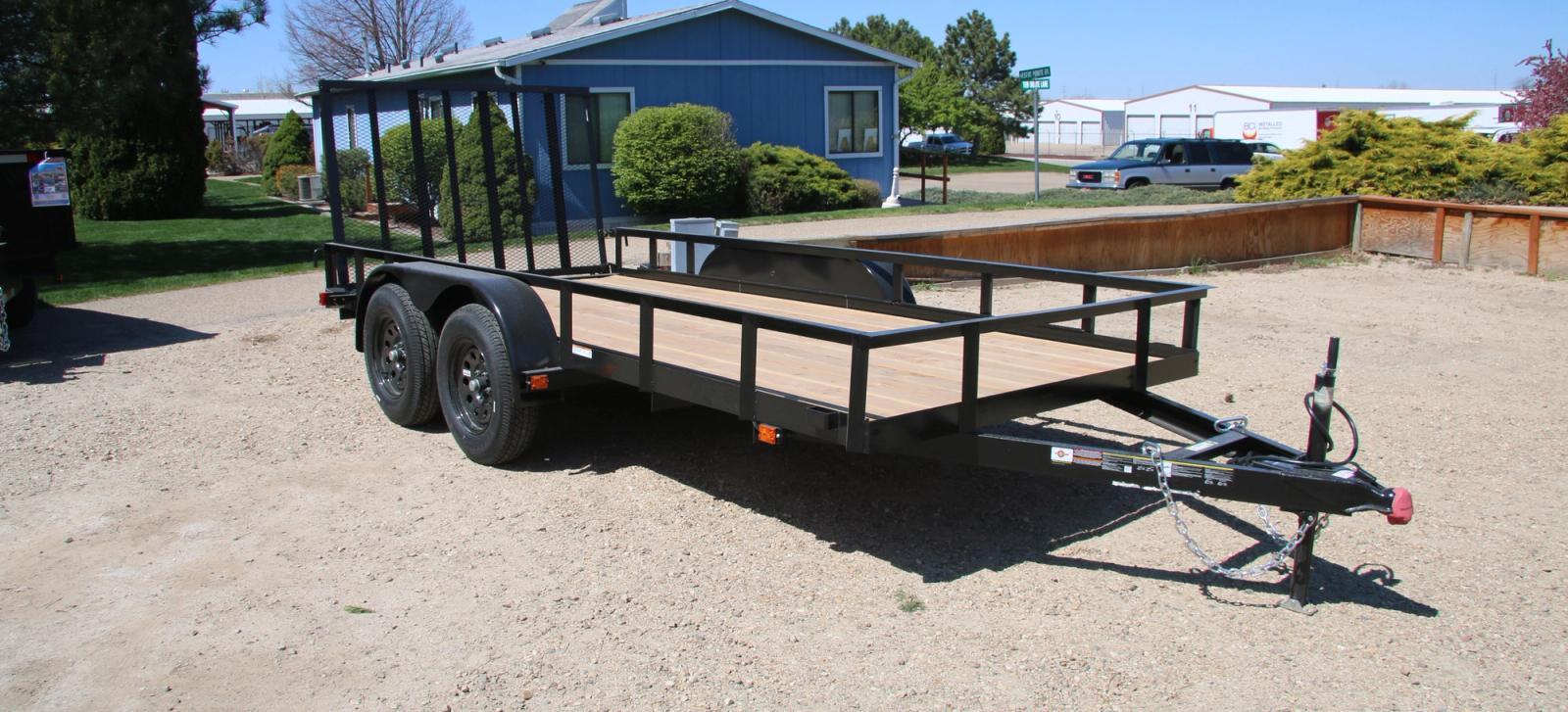
A la hora de comprar un remolque utilitario abierto, un remolque para el transporte de coches o una plataforma para maquinaria pesada, el material de la plataforma es una de las decisiones más importantes que tendrás que tomar. El suelo del remolque es el que soporta directamente los impactos físicos, la exposición a la intemperie y la distribución del peso estructural, por lo que es fundamental elegir el material adecuado.
Tanto la madera tratada de calidad industrial como el acero estriado son opciones muy válidas, pero ofrecen un rendimiento muy diferente en cuanto a capacidad de carga, seguridad en la tracción, mantenimiento y coste a largo plazo. Los proveedores directos de fábrica, como TrailersPlus, disponen de distintas configuraciones de plataforma adaptadas a cargas de trabajo específicas, por lo que conocer las ventajas e inconvenientes te ayudará a elegir la configuración más adecuada.
Esta guía analiza las principales diferencias estructurales entre las plataformas de los remolques de madera y las de acero para ayudarte a determinar qué material se adapta mejor a tus operaciones de transporte.
Comparación rápida: plataformas de remolque de madera frente a las de acero
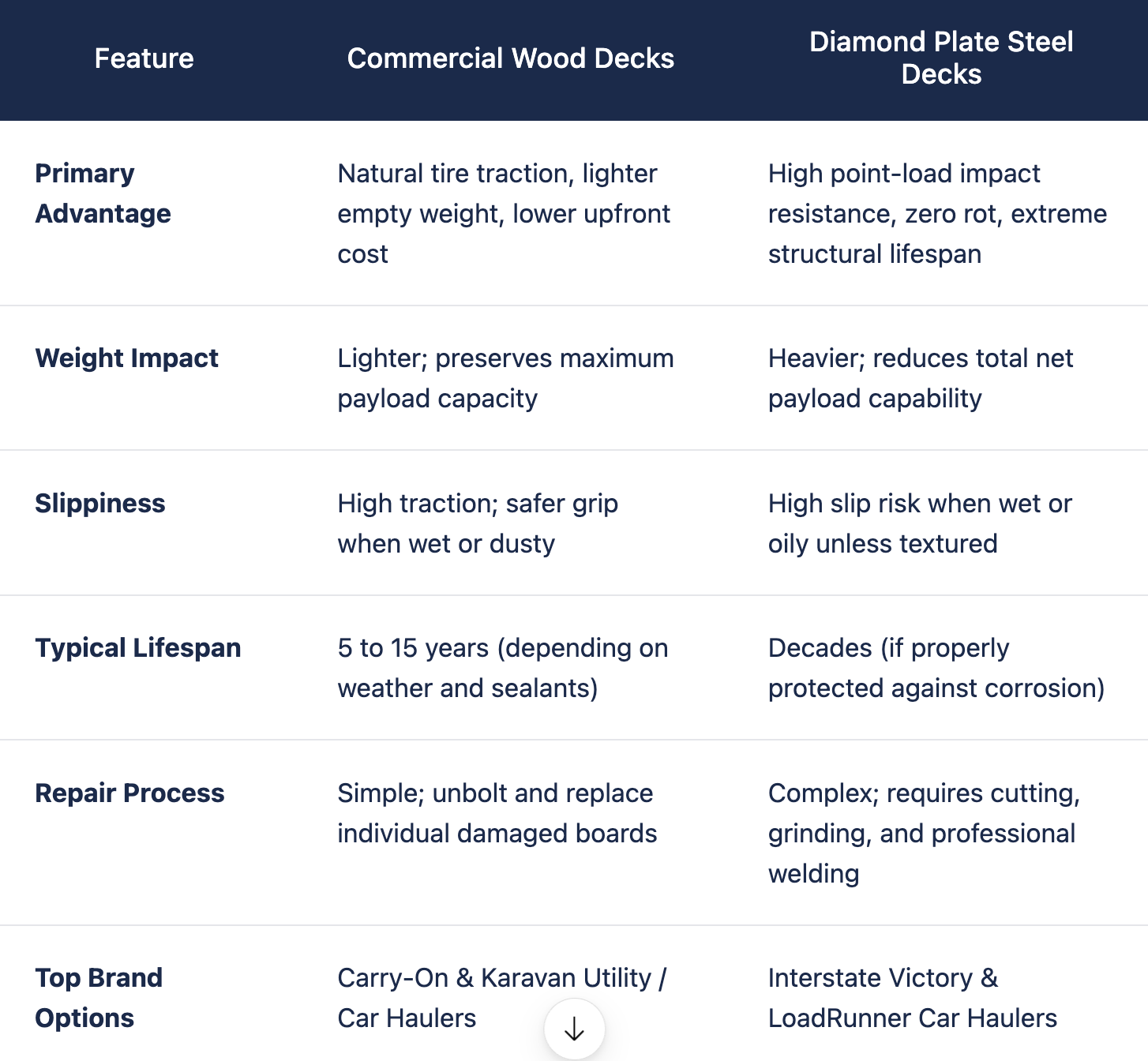
Antes de entrar en detalles técnicos, aquí tienes un resumen rápido de cómo se comparan las terrazas de madera y de acero en las principales categorías:
1. Durabilidad y absorción de impactos
El término «durabilidad» tiene dos significados totalmente distintos cuando se aplica a la madera y al acero sometidos a cargas de trabajo comerciales intensas.
Resistencia al impacto estructural
Las plataformas de acero son las campeonas indiscutibles en cuanto a resistencia al impacto bruto. Si en tus operaciones diarias tienes que descargar cargas metálicas pesadas, afiladas o compactas —piezas de fundición de hierro en bruto, chatarra, implementos para excavadoras, escombros de hormigón—, el acero no se agrietará, ni se astillará, ni se perforará. Distribuye las cargas puntuales extremas a lo largo de los travesaños del remolque sin inmutarse.
Amortiguación y flexibilidad
Las plataformas de madera tienen una ventaja técnica que el acero no puede igualar: la elasticidad natural. La madera actúa como amortiguador de vibraciones. Cuando remolcas por carreteras irregulares con baches o por autopistas con baches, las tablas de madera se flexionan ligeramente, absorbiendo las vibraciones de la carretera en lugar de transmitirlas directamente a la carga o al chasis de acero soldado del remolque.
Cabe destacar que las plataformas de acero amplifican el ruido de la carretera y las vibraciones. Si transportas equipos delicados o recorres largas distancias por autopista, un suelo de madera te ofrece una conducción notablemente más suave y silenciosa.
2. Peso y capacidad de carga útil
Cada libra de peso muerto incorporada en la plataforma de tu remolque es una libra de capacidad de carga útil que se resta a tus límites de transporte.
La ventaja de la madera en cuanto al peso
Las tablas de madera tratada son considerablemente más ligeras que las chapas de acero estructural. En un remolque para transporte de coches estándar de 7×18 con ejes tándem, un suelo de madera puede suponer un ahorro de entre 400 y 600 libras de peso en vacío en comparación con una plataforma de acero macizo. Por eso, todos los remolques para transporte de coches de la marca Carry-On que se ofrecen a través de TrailersPlus incluyen opciones para ambos tipos de plataforma, lo que te permite controlar totalmente tu margen neto de remolque.
La penalización de carga útil del acero
Una plataforma de acero con relieve de rombos añade mucho peso, lo que reduce la capacidad de carga útil neta. Si remolcas con una camioneta de media tonelada o estás sujeto legalmente a un nivel específico de peso bruto nominal del vehículo (GVWR), una plataforma de madera más ligera te permite transportar cargas más pesadas sin superar los límites legales de remolque.
3. Tracción y seguridad del operario
La carga y descarga de vehículos o maquinaria pesada requiere una tracción segura, sobre todo cuando las condiciones meteorológicas son impredecibles.
Tracción sobre madera
La madera ofrece un excelente agarre natural. Las fibras orgánicas de la madera se adhieren a los neumáticos de goma y a las ruedas de las carretillas elevadoras, incluso cuando la superficie de la plataforma está húmeda, embarrada o polvorienta. Esto reduce considerablemente el riesgo de que la carga se desplace o de que las ruedas patinen durante la carga, lo que supone una ventaja clave en nuestras gamas de productos utilitarios Carry-On y Karavan.
Vulnerabilidades de «Steel Friction»
Los patrones de chapa diamantada o antideslizante presentan relieves que mejoran el agarre de las botas, pero los suelos de acero lisos pueden volverse peligrosamente resbaladizos cuando se ven expuestos a la lluvia, el hielo o los derrames de líquido hidráulico y aceite de motor. Para el transporte profesional de vehículos o maquinaria en climas húmedos, el acero requiere cinta antideslizante o recubrimientos texturizados para garantizar la seguridad.
4. Coste inicial frente al mantenimiento a lo largo de la vida útil
Precio de compra inicial
Los remolques con plataforma de madera tienen un precio de compra inicial más bajo. Los suelos de acero requieren materias primas más caras y un extenso trabajo de soldadura en fábrica, lo que encarece el precio de venta al público.
La realidad del mantenimiento y la reparación
El panorama de los costes puede variar a lo largo de la vida útil del remolque, que se extiende a lo largo de una década:
Mantenimiento de la madera: La madera requiere un mantenimiento periódico. Para maximizar la vida útil de las tablas, aplica un repelente de agua o un sellador para madera de calidad profesional cada 12 o 24 meses para evitar que se pudran, se deformen o se degraden por la radiación UV. Por el lado positivo, si una sola tabla se pudre o se agrieta, repararla es barato y sencillo: basta con desatornillar la tabla dañada y colocar una nueva en su lugar.
Mantenimiento del acero: El principal enemigo del acero es el óxido. Con el paso del tiempo, la carga de maquinaria pesada acabará inevitablemente rayando la pintura o el recubrimiento en polvo, dejando el metal al descubierto y expuesto a la humedad y a la sal de la carretera. Tendrás que retocar rápidamente esas zonas expuestas con imprimación y pintura antioxidantes para evitar que se descascare. Las plataformas de uso comercial, como la serie LoadRunner de Interstate, utilizan recubrimientos de primera calidad y calibres de acero más gruesos para mitigar este desgaste, pero sigue siendo necesario un control constante.
Veredicto final: ¿Qué material necesitas para tu terraza?
Elige una terraza de madera comercial si:
- Transportas vehículos con ruedas o mercancía en general. Los quads, los vehículos side-by-side, los cortacéspedes autopropulsados y los vehículos de obra con ruedas de goma se benefician de la tracción superior que ofrece la madera. Nuestras gamas utilitarias Carry-On y Karavan cuentan con plataformas de madera tratada diseñadas para ofrecer el máximo agarre natural.
- Quieres maximizar la carga útil. Es necesario que el remolque sea lo más ligero posible para disponer de suficiente capacidad de remolque para cargas más pesadas.
- Prefieres un mantenimiento sencillo y económico. Quieres un precio de compra más bajo y que, en el futuro, la sustitución de las placas sea fácil, como en una ferretería.
Elige una plataforma de acero con superficie antideslizante si:
- Transportas cargas puntuales pesadas o chatarra con bordes afilados. Tu carga incluye raíles de acero, bloques de metal en bruto, accesorios para maquinaria pesada o materiales de demolición en bruto que podrían arañar o astillar las tablas de madera.
- Nunca debes sustituir las tablas podridas. Tienes pensado conservar el remolque durante décadas y prefieres retocar la pintura rayada antes que sustituir la madera estructural. Una plataforma de acero macizo en un remolque para transporte de coches de las gamas Interstate Victory o LoadRunner puede soportar un uso intensivo a escala industrial.
- Tu remolque se utiliza para la exposición exclusiva de vehículos. Un suelo de acero macizo, del mismo color que el vehículo, aporta una estética limpia y uniforme para la exposición de vehículos de alta gama.
¿Estás listo para comparar ambas opciones de tarima una al lado de la otra? Explora en línea nuestro stock en tiempo real, directamente de fábrica, elige tu tamaño y concierta una cita personalizada en tu tienda TrailersPlus más cercana para encontrar la configuración perfecta para tu volumen de trabajo.
Preguntas frecuentes
¿Qué tipo de madera se suele utilizar para las plataformas de los remolques de alta gama?
La opción más habitual es el pino tratado a presión, que se somete a un tratamiento químico para que resista a los insectos, la pudrición fúngica y la descomposición. Para los remolques comerciales de uso intensivo, se prefiere el roble blanco aserrado en bruto o la madera dura especializada de apitong, debido a su densidad y a su excepcional resistencia a las marcas de gubia.
¿Se puede instalar un suelo de madera dentro de un remolque de carga cerrado?
Los remolques de carga cerrados suelen utilizar un suelo de chapa plana en lugar de tablones gruesos de madera dimensional. La configuración estándar de los remolques de carga Interstate es una chapa de contrachapado para exteriores de alta calidad de 3/4 de pulgada o una plataforma de madera compuesta, tratada en fábrica con un recubrimiento estructural de grado automovilístico para sellar el chasis frente a las salpicaduras de la carretera y la humedad.
¿La plataforma de acero del remolque hace que este sea más ruidoso al remolcarlo?
Sí. Las plataformas metálicas macizas carecen de las propiedades de amortiguación acústica de las fibras de madera. Los suelos de acero actúan como un amplificador de las vibraciones de la carretera: cada golpe contra una piedra, cada traqueteo en una rampa o cada bache producirá un sonido metálico más fuerte y perceptible durante el remolque.