- Piezas
- Conocimientos sobre remolques
Remolcar un remolque añade un peso y una carga considerables al vehículo. Contar con unos frenos de remolque fiables es fundamental en muchas situaciones de transporte. No solo alivian la carga sobre el vehículo, sino que también son obligatorios por ley en muchos estados cuando se superan determinados límites de peso. En este artículo se explica por qué son esenciales los frenos de remolque, cómo funcionan y qué tipos de remolques suelen necesitarlos.
¿Por qué son tan importantes los frenos de los remolques?
Si tu remolque no tiene frenos, los frenos de tu vehículo son los únicos que deben asumir la carga de frenar tanto al vehículo como al remolque. Esto puede provocar rápidamente una serie de problemas:
- Distancias de frenado prolongadas: Las cargas más pesadas requieren una mayor fuerza de frenado, lo que aumenta el riesgo de accidentes en situaciones de emergencia.
- Desgaste excesivo de los frenos del vehículo: El uso excesivo de los frenos de tu vehículo acelera su desgaste, lo que conlleva reparaciones costosas y una menor vida útil de los frenos.
- Pérdida de control: Un frenado desigual puede provocar que el remolque se balancee, sobre todo en pendientes o durante frenadas bruscas, lo que podría dar lugar a situaciones peligrosas.
Sin frenos en el remolque, las distancias de frenado aumentan considerablemente, lo que pone en peligro a todos los usuarios de la carretera. Depender únicamente de los frenos del vehículo tractor provoca un desgaste excesivo, lo que conlleva mayores costes de mantenimiento y una disminución del rendimiento de los frenos con el paso del tiempo.
¿En qué casos es obligatorio por ley que los remolques dispongan de frenos?
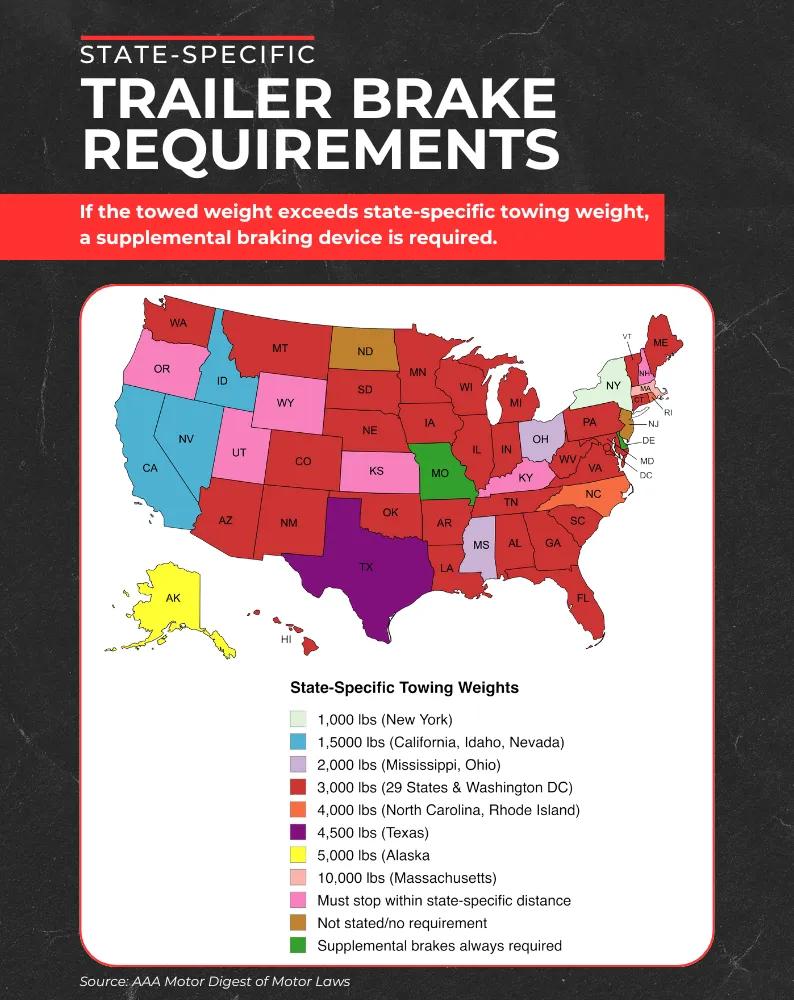
Los frenos auxiliares son obligatorios en Dakota del Norte y Nueva Jersey, independientemente de la carga que se remolque. En la mayoría de los demás estados, los frenos del remolque son obligatorios cuando el peso remolcado supera el límite especificado por el estado. Como norma general, los remolques con un peso bruto del remolque (GTW) —el peso combinado del remolque y su carga— deben disponer de frenos si el GTW supera las 3.000 libras.
Consulta siempre la normativa específica de tu estado y el manual del propietario de tu vehículo para obtener la información más precisa sobre los requisitos de frenado de los remolques y los límites de carga.
Tipos de frenos para remolques
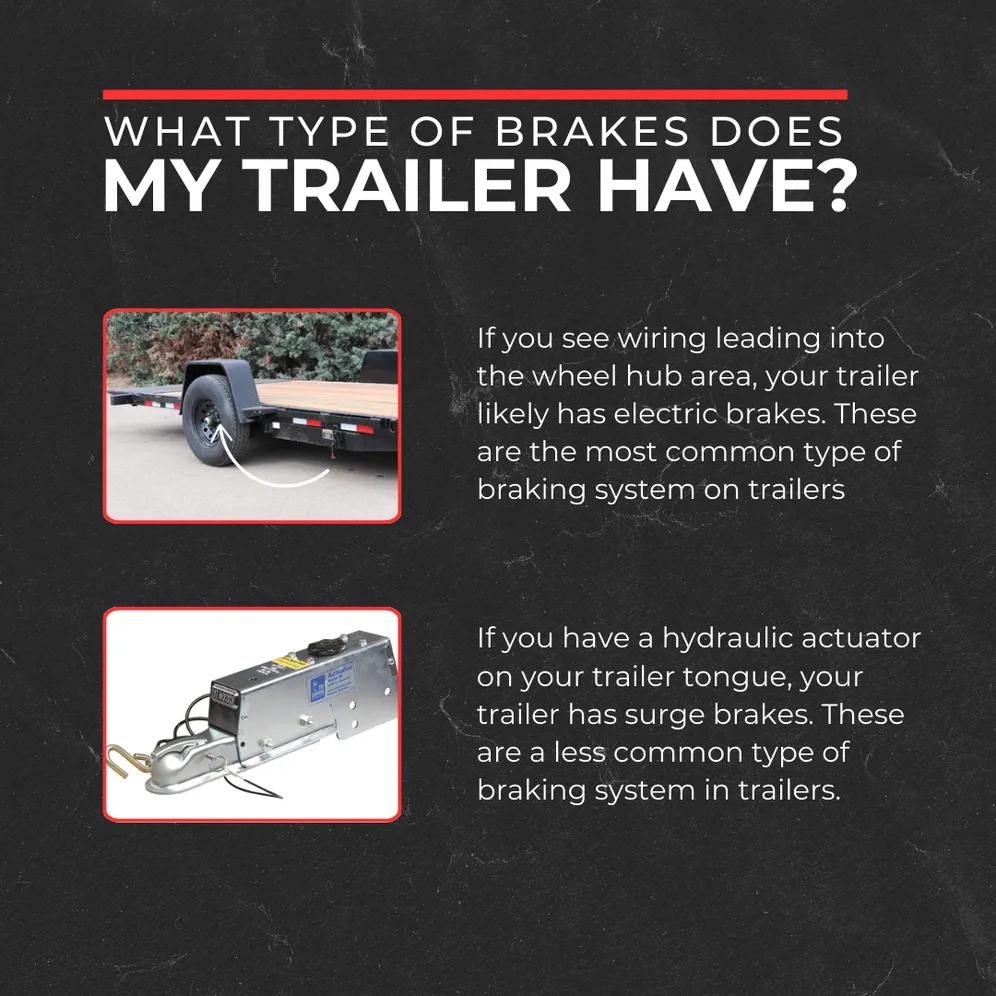
Existen dos tipos principales de frenos: eléctrico y frenos de inercia. Los frenos eléctricos funcionan mediante un electroimán activado por un controlador de frenos instalado en el vehículo tractor. Al accionar los frenos, el controlador envía una señal al remolque, activando así los frenos. Este sistema permite ajustar la fuerza de frenado y controlarlo manualmente, lo que mejora la seguridad y la estabilidad, especialmente en pendientes o durante paradas bruscas. Los frenos eléctricos ofrecen un frenado preciso y adaptable, lo que los convierte en la opción preferida para la mayoría de los remolques.
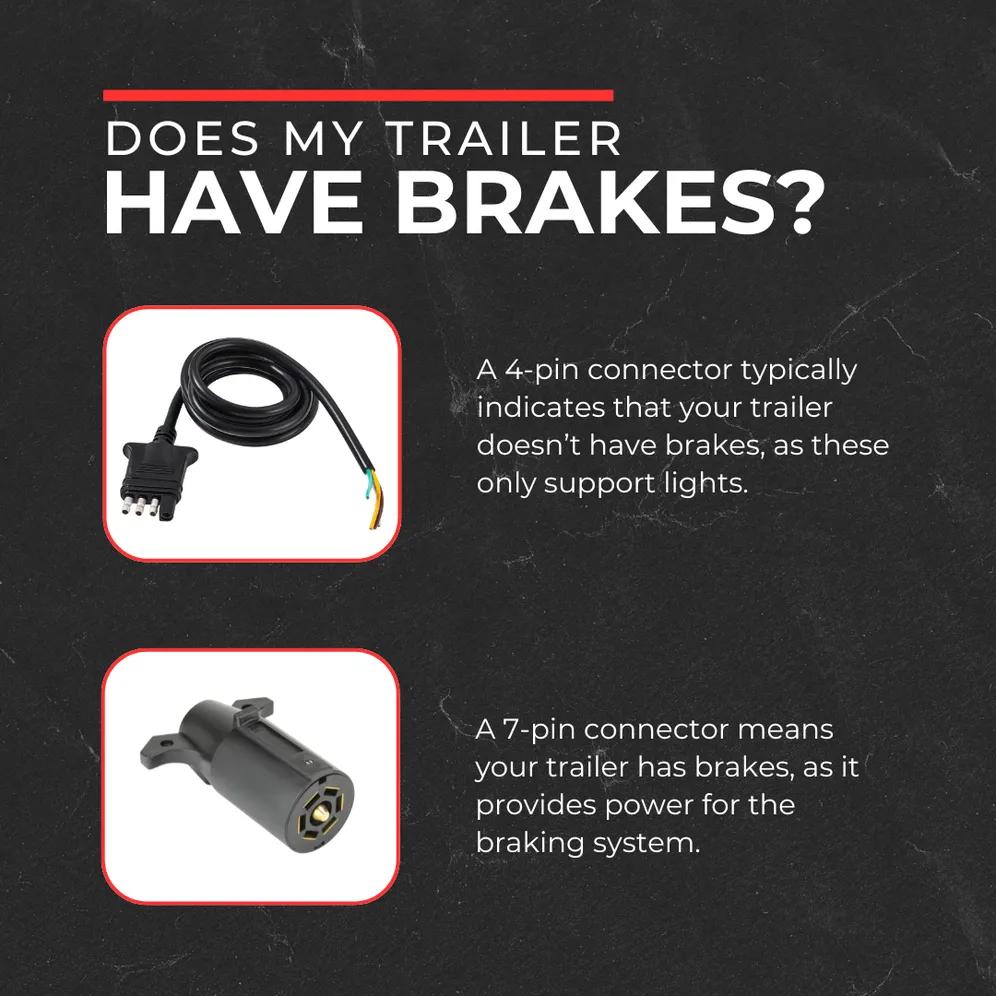
Los frenos de inercia funcionan mediante un sistema hidráulico. Cuando el remolque reduce la velocidad, ejerce presión sobre el enganche, lo que activa un pistón hidráulico que acciona automáticamente los frenos. Este sistema es autónomo y no depende de ningún componente eléctrico. Aunque se puede utilizar un conector de 7 clavijas para las luces del remolque, los frenos de inercia no necesitan alimentación eléctrica del vehículo tractor para funcionar.
Algunos remolques solo tienen frenos en un eje, pero es posible que esto no sea suficiente para cargas pesadas o en todas las situaciones. Consulta la normativa de tu estado para conocer los requisitos específicos.
¿Necesito un controlador de frenos?
Si tu remolque cuenta con frenos eléctricos, es imprescindible disponer de un controlador de frenos. Los frenos de sobrepresión no requieren un controlador de frenos independiente, ya que funcionan de forma autónoma. Un controlador de frenos actúa como intermediario entre tu vehículo y el sistema de frenado del remolque, lo que te permite controlar la fuerza de frenado y accionar los frenos manualmente cuando sea necesario.
- Controladores de frenado con retardo: Aplica una fuerza de frenado preestablecida con un retraso tras la activación de los frenos del vehículo. Adecuado para situaciones de remolque con cargas ligeras, aunque puede aumentar el desgaste de los frenos.
- Controladores de freno proporcionales: Aplican una fuerza de frenado proporcional a la intensidad con la que se accionan los frenos del vehículo, lo que proporciona un control más preciso y reduce el desgaste de los frenos. Se recomiendan para cargas más pesadas y para remolcar en largas distancias.
Conclusión
Conocer el sistema de frenos de tu remolque es fundamental para realizar un remolque seguro y responsable. Al asegurarte de que tu remolque esté equipado con los frenos adecuados y de que el sistema de frenos reciba un mantenimiento adecuado, puedes mejorar considerablemente la seguridad en la carretera. Consulta siempre la normativa de tu estado y el manual del propietario de tu vehículo para obtener orientación específica sobre los requisitos de frenos de los remolques.