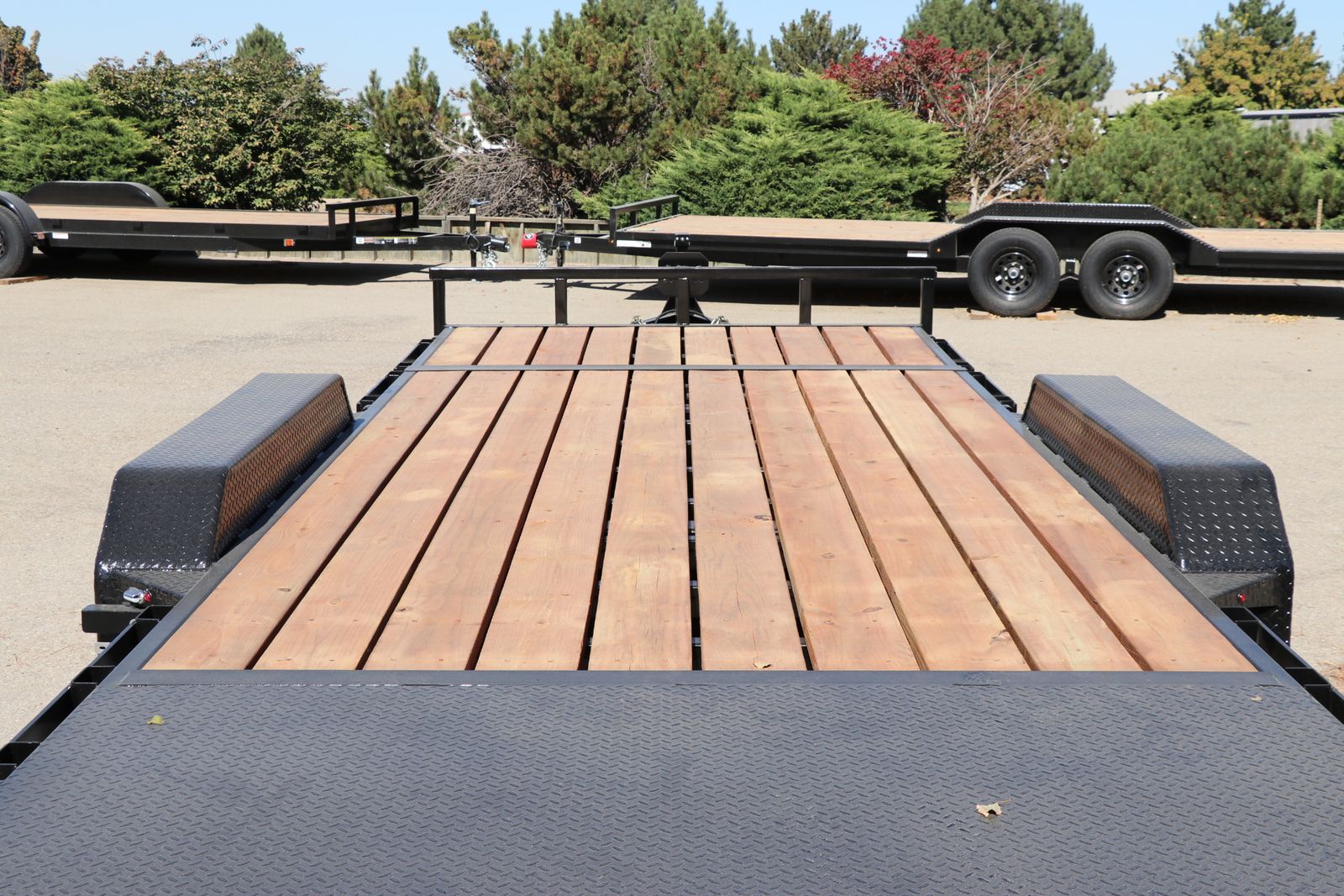
- Remolques para maquinaria
- Conocimientos sobre remolques
A la hora de comprar un remolque nuevo, es fácil dar por sentado que los remolques de plataforma y los remolques para maquinaria son, en esencia, lo mismo. Al fin y al cabo, ambos cuentan con una plataforma abierta y están diseñados para transportar cargas voluminosas o pesadas. Sin embargo, la elección adecuada depende de lo que tengas pensado transportar y de la frecuencia con la que lo vayas a utilizar.
Conocer las diferencias entre un remolque de plataforma y un remolque para maquinaria puede ayudarte a invertir en un modelo que se adapte mejor a tu trabajo, a tu vehículo tractor y a tus necesidades de transporte a largo plazo. Echa un vistazo a esta comparación de TrailersPlus y, a continuación, ponte en contacto con nosotros para encontrar un remolque que se ajuste a tus necesidades.
Puntos clave
- Lo importante es la finalidad: los remolques de plataforma ofrecen flexibilidad, mientras que los remolques para maquinaria están diseñados específicamente para transportar maquinaria y maquinaria pesada.
- La estructura es diferente: los remolques para maquinaria suelen contar con chasis más resistentes y mayor capacidad de carga.
- Elige en función de tu trabajo: el remolque adecuado depende de la carga que transportes con más frecuencia.
¿Qué es un remolque de plataforma?
Un remolque de plataforma cuenta con una superficie abierta y sin obstáculos que permite cargar la mercancía por la parte trasera o por cualquiera de los lados. Este diseño lo convierte en una opción versátil para transportar cargas de gran tamaño o de forma irregular que quizá no quepan en un remolque de carga cerrado.
Los remolques de plataforma se utilizan habitualmente para transportar:
- Madera
- Materiales de construcción
- Palés
- Tuberías
- Productos para jardinería
- Maquinaria agrícola
- Artículos recreativos de gran tamaño
Dado que no hay paredes ni techo, la carga con carretillas elevadoras u otros equipos suele ser más rápida y sencilla. Además, el diseño abierto te ofrece una mayor flexibilidad a la hora de sujetar cargas con formas irregulares.
¿Qué es un remolque para maquinaria?
Remolques para maquinaria están diseñados específicamente para el transporte de maquinaria y equipos pesados. Aunque también cuentan con una plataforma abierta, están fabricados para soportar cargas considerablemente más pesadas que muchos remolques de plataforma de uso general.
Entre la mercancía habitual se incluye:
- Minicargadoras
- Miniexcavadoras
- Tractores compactos
- Vehículos utilitarios
- Plataformas elevadoras de tijera
- Maquinaria de construcción
Muchos remolques para maquinaria cuentan con rampas de carga integradas, bastidores de acero reforzado, sistemas de suspensión de alta resistencia y un peso bruto máximo autorizado (GVWR) más elevado. Estas características contribuyen a proporcionar la durabilidad y la estabilidad necesarias para aplicaciones comerciales exigentes.
Remolque de plataforma frente a remolque para maquinaria: diferencias clave
Aunque los remolques de plataforma y los remolques para maquinaria comparten un diseño de plataforma abierta, se fabrican con fines distintos.
Un remolque de plataforma está diseñado para ser lo más versátil posible. Su diseño abierto facilita la carga desde los laterales o la parte trasera, lo que lo convierte en una opción práctica para transportar materiales de construcción, palés, madera y otros artículos de gran tamaño. Si transportas habitualmente una gran variedad de cargas que no requieren protección en un espacio cerrado, un modelo de plataforma te ofrece una flexibilidad excelente.
Un remolque para maquinaria está diseñado específicamente para transportar maquinaria pesada y equipos comerciales. Estos modelos suelen contar con bastidores de acero reforzado, mayor capacidad de carga, componentes de suspensión de alta resistencia y rampas de carga integradas que facilitan la carga y la descarga. Dado que están fabricados para soportar mayores esfuerzos, suelen ser la opción preferida por contratistas, paisajistas, agricultores y profesionales de la construcción.
Otra diferencia importante es la capacidad de carga útil. Aunque algunos remolques de plataforma pueden transportar cargas considerables, los remolques para maquinaria suelen estar diseñados para transportar equipos más pesados, como minicargadoras, tractores compactos, miniexcavadoras y otra maquinaria.
En definitiva, la mejor opción depende del uso que le vayas a dar. Si necesitas la máxima versatilidad para transportar una amplia variedad de materiales, un remolque de plataforma plana puede ser la mejor opción. Si tu trabajo implica habitualmente el transporte de maquinaria pesada, un remolque para maquinaria suele ser la solución más adecuada.
Preguntas frecuentes
¿Qué es el GVWR?
El GVWR (peso bruto nominal del vehículo) es el peso combinado máximo permitido del remolque y su carga.*
¿Cómo sé qué tamaño de remolque necesito?
Ten en cuenta las dimensiones y el peso de la carga que piensas transportar con mayor frecuencia, así como la capacidad de remolque de tu vehículo tractor.
¿Con qué frecuencia hay que llevar un remolque al taller?
Las inspecciones y el mantenimiento rutinarios deben realizarse según las recomendaciones del fabricante y ser más frecuentes cuanto mayor sea el uso.
Compra hoy mismo remolques para pan plano y equipamiento
Para decidir entre un remolque de plataforma y un remolque para maquinaria, lo primero es tener claro cómo lo vas a utilizar. Si tienes en cuenta tu carga, tus necesidades de remolque y tus proyectos futuros, estarás mejor preparado para elegir un remolque que te ofrezca un rendimiento fiable durante muchos años.
Si estás listo para explorar tus opciones, el equipo de TrailersPlus puede ayudarte a comparar los modelos disponibles y a encontrar la solución más adecuada para tus necesidades de transporte. ¡Ponte en contacto con nosotros hoy mismo!
*Fuente: Kelley Blue Book