- Trailer Knowledge
Why a Balanced Trailer Load Matters
A trailer needs to be balanced to tow safely. If too much weight is in the wrong place—too far forward, too far back, or off to one side—it puts stress on the frame, axles, tires, and hitch. It also affects how the trailer handles behind your vehicle. Poor weight distribution can cause swaying, uneven tire wear, and longer stopping distances. Appropriate weight distribution means your trailer stays steady, your tow vehicle stays in control, and you avoid unnecessary damage.
The Right Way to Load a Trailer
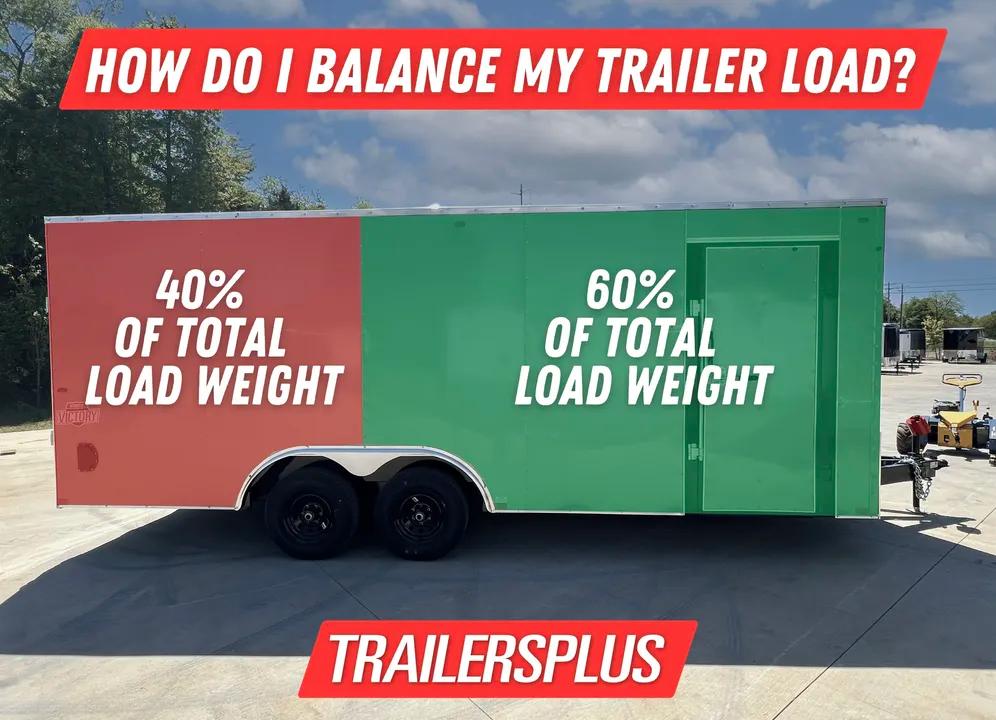
Your trailer is made to work for you, and the safest way to do this is to properly distribute the weight of your cargo. Loading a trailer the right way starts with placing the heaviest items directly over the axles. This helps keep the weight centered and limits strain on suspension components. 60% of the total load should be in the front half of the trailer, which keeps the right amount of pressure on the hitch. Too little tongue weight can make the trailer unstable, while too much can overload the rear axle of the tow vehicle. Tongue weight should equal 10% to 15% of the trailer’s total loaded weight to ensure safe, stable towing without overloading the tow vehicle. If doubt ever crosses your mind when it comes to even load distribution, visit your nearest certified scale and weigh your trailer.
Make sure the weight is also distributed evenly from left to right. When one side carries more than the other, it increases the chance of uneven tire wear and makes the trailer more likely to lean or pull under load. Every item should be tied down securely to prevent shifting during transit. Contact your local TrailersPlus for Anti-Sway Hitches and all your Cargo Management needs, today!
DOT Compliance and Legal Risks
Incorrect loading isn’t just a safety issue—you are legally responsible for loading your trailer safely. Law enforcement can stop a trailer and issue citations for loads that are unstable, overloaded, or improperly secured. If you're exceeding axle weight ratings, lacking proper tie-downs, or showing signs of sway or sag, you’ll need to adjust your trailer before you continue. Contact your local TrailersPlus location to have a “Certified Trailer Inspection” performed today before you hit the road.
For commercial haulers, this can result in citations, fines, or worse—being placed out of service. Even for private use, the penalties can include tickets or impound fees. Taking a few minutes to load correctly can prevent hours of delays and unnecessary costs.
Trailer Sway
One of the most dangerous outcomes of poor loading is trailer sway. This happens when the trailer begins to move side to side behind the tow vehicle. It’s usually caused by too much weight in the rear of the trailer or a load that isn’t properly secured. Once sway begins, it’s hard to control—especially at higher speeds or in windy conditions.
If not corrected quickly, sway can lead to loss of control, jackknifing, or full rollover. Even if you manage to recover, it places serious strain on your tow vehicle, hitch, and trailer frame. In many cases, sway could have been prevented entirely by placing more weight toward the front of the trailer and checking that the load was tight and balanced.
Braking and Stopping Distance
Improper weight distribution changes how your trailer and tow vehicle respond under braking. If too much weight is placed at the back of the trailer, tongue weight drops. That reduces the downward force on the hitch, which makes the trailer less stable and more likely to sway. It also means the trailer’s brakes contribute less during a stop, and in downhill situations, the trailer can push against the tow vehicle, increasing stopping distance and reducing control.
If too much weight is loaded toward the front, tongue weight can climb past the safe range of 10%–15%. This overloads the rear axle of the tow vehicle and takes pressure off the front axle. As a result, you lose steering responsiveness, reduce braking efficiency on the front wheels, and increase wear on the rear suspension. That combination makes the entire setup harder to stop and more dangerous in emergency braking conditions. While most Interstate trailers have Never-Adjust Brakes, it’s best practice to schedule your trailer for a “Certified Trailer Inspection” before any trip.
Tire and Axle Damage
When a trailer is loaded unevenly or past its rated capacity, one side or one axle ends up doing more work than it should. This leads to uneven tire wear, heat buildup, and faster breakdown of suspension components.
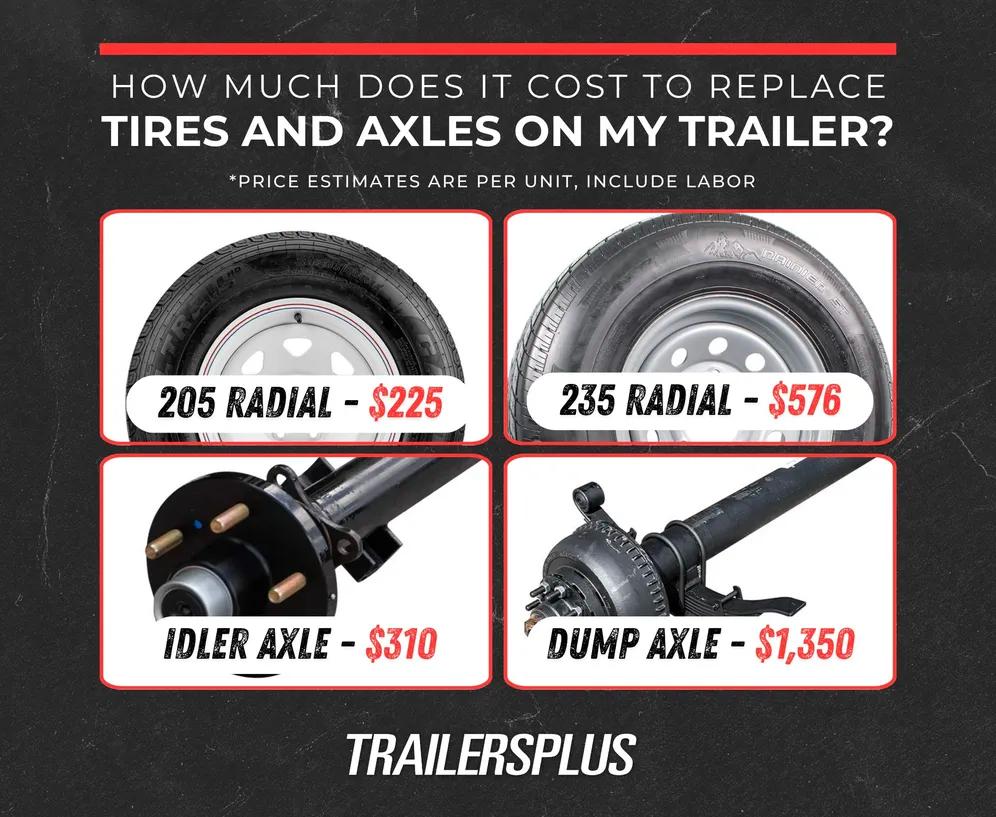
Replacing trailer tires and axles can add up quickly. A standard 205 tire is around $225, while heavier-duty 235 models with 8-lug wheels can reach up to $576 each. Axle replacements vary by type and capacity—light-duty 2,000 lb idler axles typically cost about $310, while axles used on dump trailers can run as high as $1,350. Labor costs for installation generally fall between $200 and $400 depending on the size of the trailer and whether it includes electric brakes. These costs are often avoidable—most are caused by improper loading or poor weight distribution.
Final Takeaway
If you’re hauling a trailer, loading it the right way isn’t optional. It affects whether you're in compliance with DOT requirements, how stable the trailer is behind your vehicle, how much sway you encounter at speed, how well your brakes perform, and how quickly your tires and axles wear out. A well-balanced, properly secured load helps prevent breakdowns, accidents, and expensive repairs. When you join the TrailersPlus family we have a team of experts to make sure that you’re safe every time you hit the road.
If you’ve already experienced damage from poor loading—or just want to avoid it—TrailersPlus can help. Our service teams handle wheel and axle repairs at 80+ locations nationwide. If your trailer is beyond repair or no longer fits your needs, we also offer a wide selection of new models ready to tow, with flexible financing and rent-to-own options available. Whether you need help setting up a safe load or getting back on the road, we’re behind you all the way.