- Parts
- Trailer Knowledge
Towing a trailer adds significant weight and stress to your vehicle. Reliable trailer brakes are crucial for many hauling circumstances. Not only do they remove stress weight from your vehicle, but they are also legally required in many states when exceeding specific weight limits. This article will explain why trailer brakes are essential, how they work, and which trailers typically require them.
Why Are Trailer Brakes So Important?
If your trailer doesn’t have brakes, your vehicle's brakes alone bear the burden of stopping both itself and the trailer. This can quickly lead to a handful of problems:
- Extended Stopping Distances: Heavier loads require greater braking force, increasing the risk of accidents in emergency situations.
- Excessive Wear on Vehicle Brakes: Overworking your vehicle's brakes accelerates wear and tear, leading to costly repairs and reduced brake life.
- Loss of Control: Uneven braking can cause the trailer to sway, especially on inclines or during sudden stops, potentially leading to dangerous situations.
Without trailer brakes, stopping distances increase significantly, putting everyone on the road at risk. Relying solely on the towing vehicle’s brakes causes excessive wear and tear, leading to higher maintenance costs and reduced brake performance over time.
When Are Trailer Brakes Legally Required?
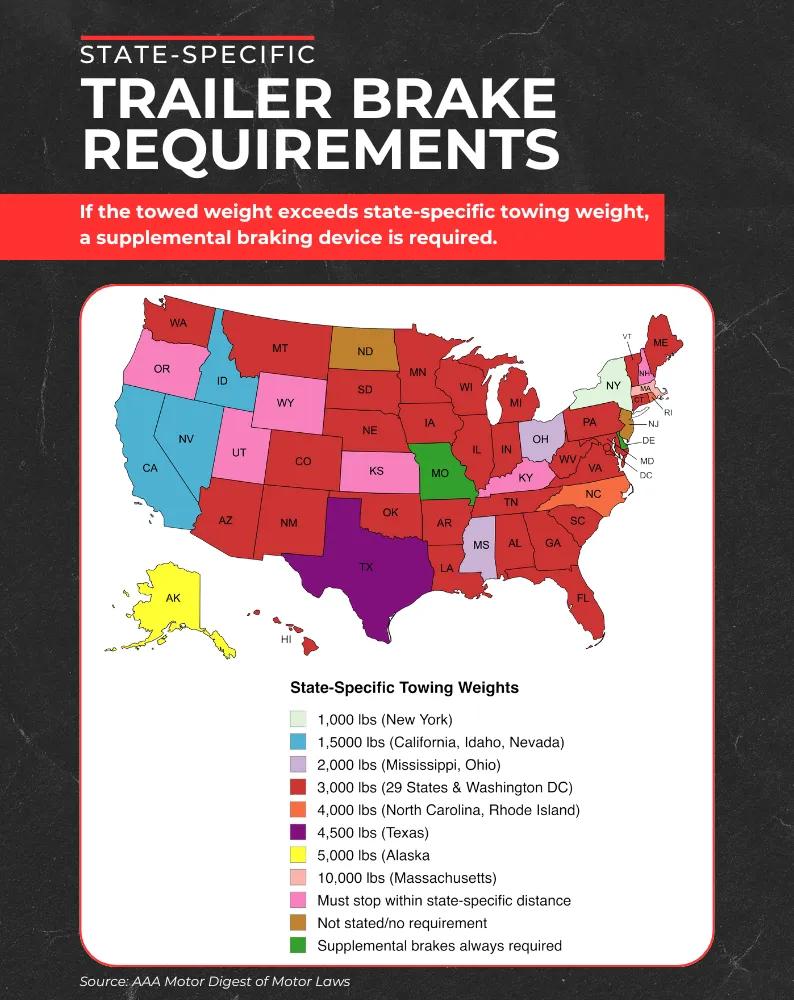
Supplemental brakes are mandatory in North Dakota and New Jersey, regardless of the load being towed. In most other states, trailer brakes are required when the towing weight exceeds the state’s specified limit. As a general guideline, trailers with a Gross Trailer Weight (GTW)—the combined weight of the trailer and its cargo—should have brakes if the GTW exceeds 3,000 pounds.
Always consult your state's specific regulations and your vehicle's owner's manual for the most accurate information on trailer brake requirements and hauling limits.
Types of Trailer Brakes
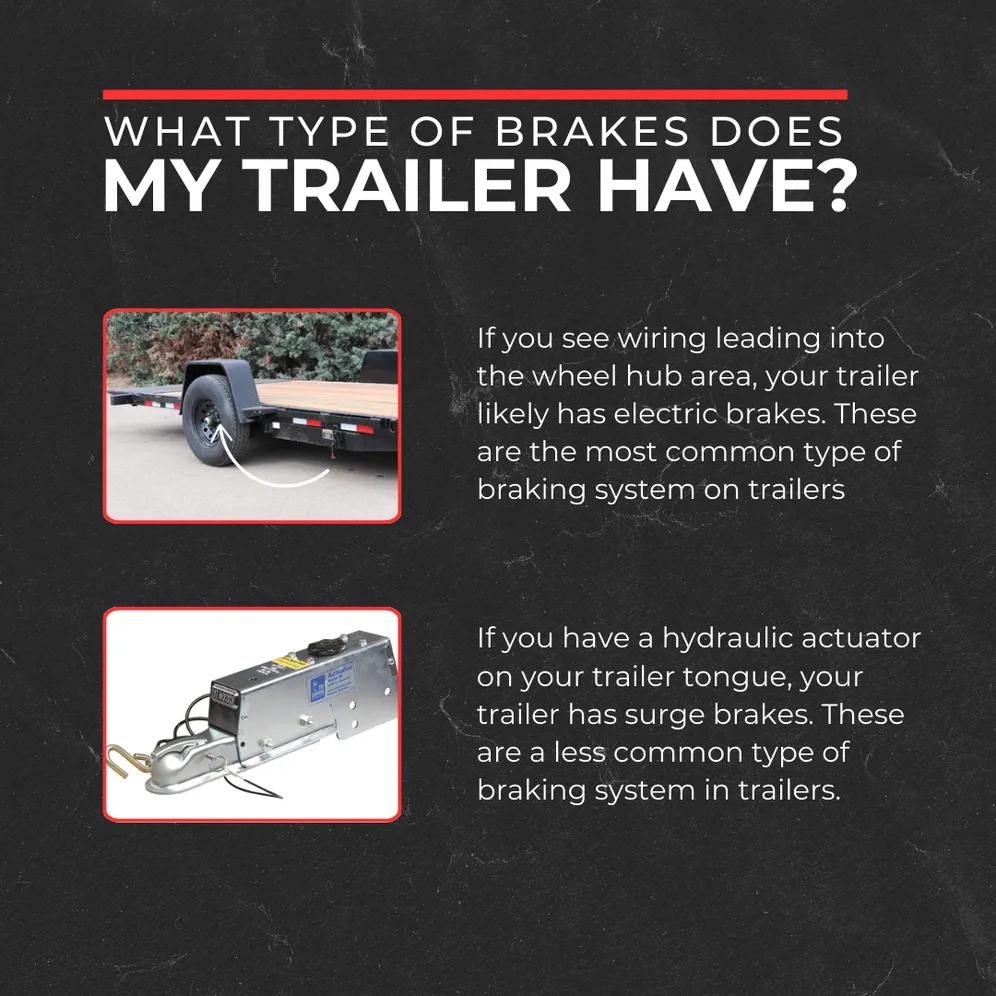
There are two main types of brakes: electric and surge brakes. Electric brakes are powered by an electromagnet activated by a brake controller installed in your tow vehicle. When you apply your brakes, the controller sends a signal to the trailer, activating the brakes. This system allows for adjustable braking force and manual control, enhancing safety and stability, especially on hills or during sudden stops. Electric brakes offer precise and adaptable braking, making them the preferred choice for most trailers.
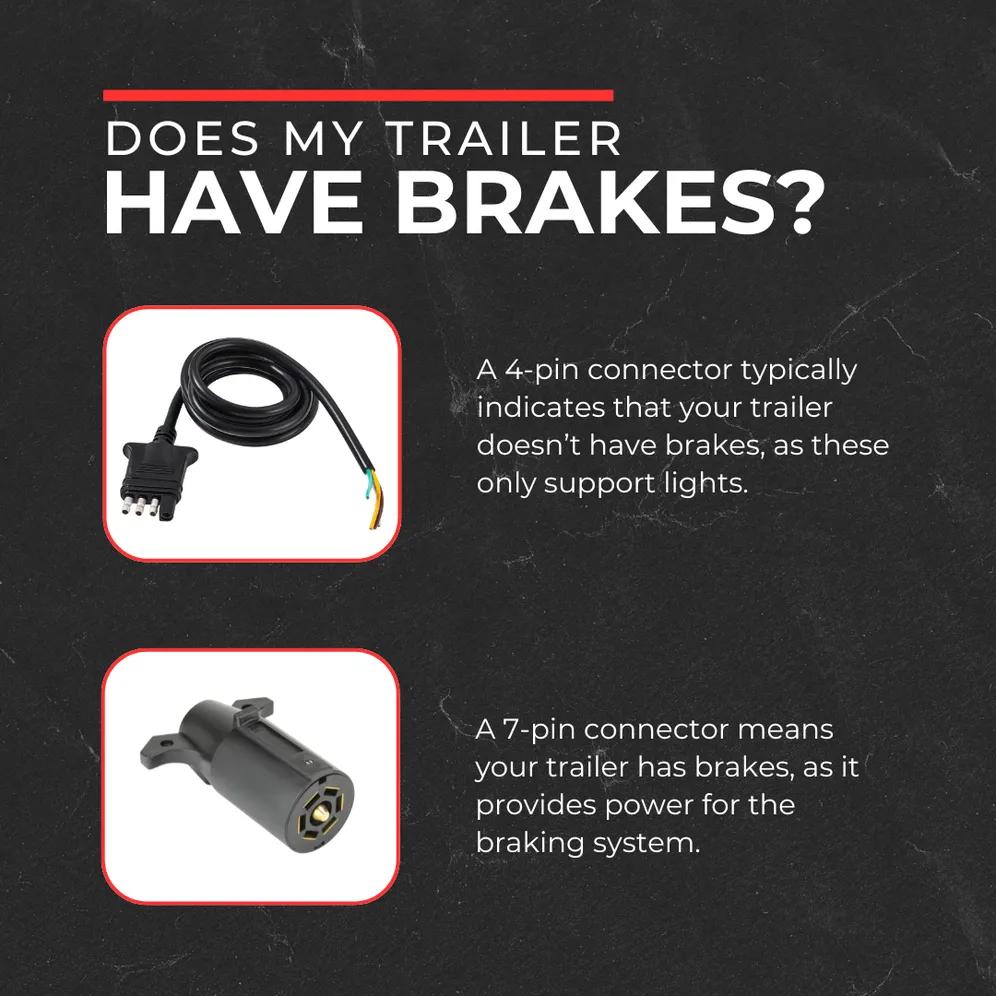
Surge brakes use a hydraulic system to operate. When the trailer slows down, it presses against the hitch, activating a hydraulic piston that automatically applies the brakes. This system is self-contained and does not rely on any electrical components. While a 7-pin connector may be used for trailer lights, surge brakes do not require electrical power from the tow vehicle to function.
Some trailers have brakes on only one axle, but this may not be sufficient for heavy loads or in all situations. Refer to your state's regulations for specific requirements.
Do I Need a Brake Controller?
If your trailer uses electric brakes, a brake controller is essential. Surge brakes do not require a separate brake controller as they operate independently. A brake controller acts as the intermediary between your vehicle and the trailer's braking system, allowing you to control braking force and manually apply brakes when necessary.
- Time-Delayed Brake Controllers: Apply a preset braking force with a delay after your vehicle's brakes engage. Suitable for lighter towing situations, but can increase brake wear.
- Proportional Brake Controllers: Apply braking force in proportion to how hard you apply your vehicle's brakes, providing more precise control and reducing brake wear. These are recommended for heavier loads and long-distance towing.
Conclusion
Understanding your trailer's braking system is crucial for safe and responsible towing. By ensuring your trailer is equipped with the appropriate brakes and that your braking system is properly maintained, you can significantly enhance safety on the road. Always consult your state's regulations and your vehicle's owner's manual for specific guidance on trailer brake requirements.